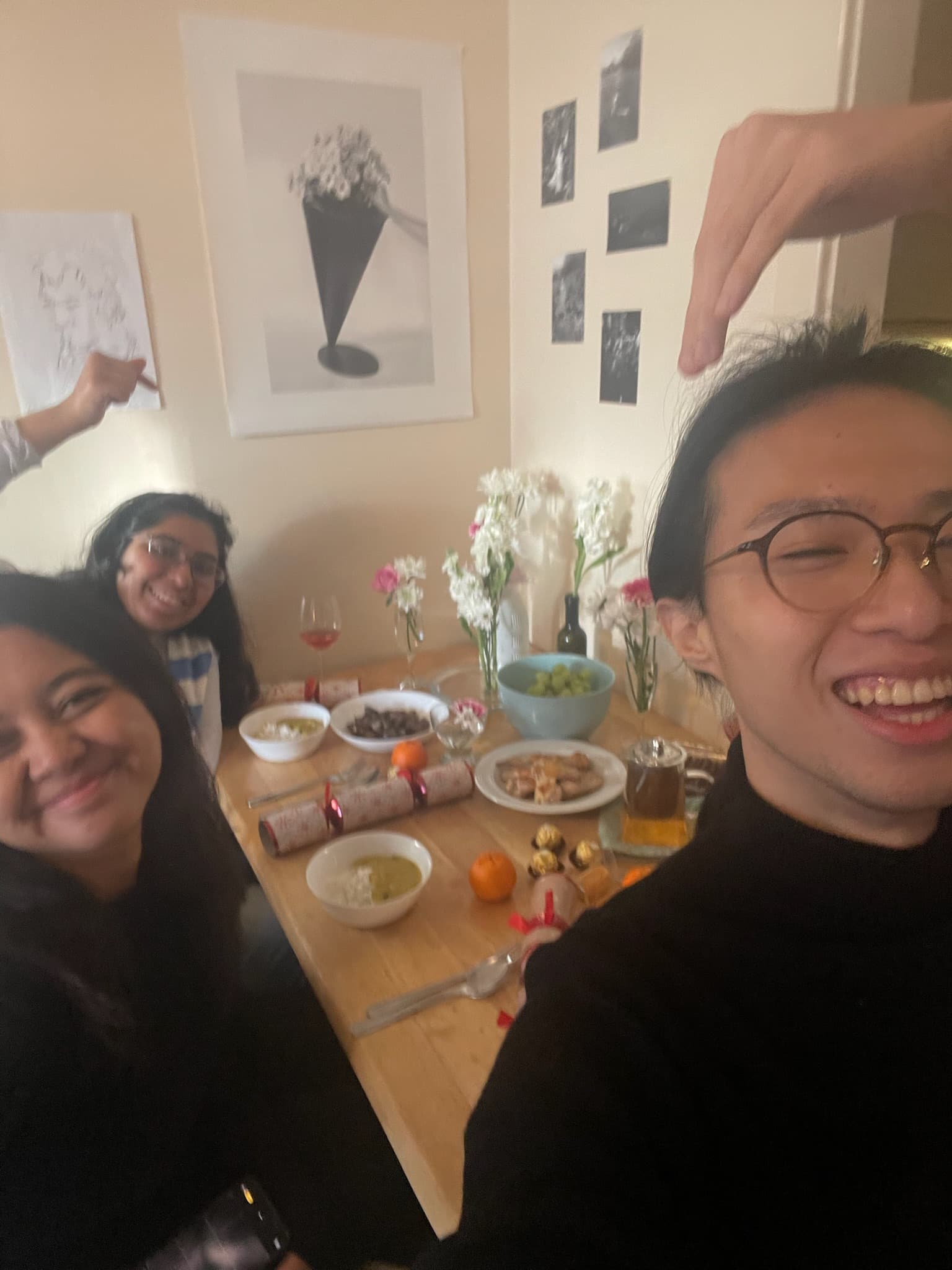
The third term of the MA Service Design at RCA is about one thing only: the IRP, Independent Research Project — the graduation project that runs from March all the way to July. In the five projects across the first two terms, either the topic or the team came assigned; the IRP was the first and only time in the whole master's year that both were ours to decide.
January: A Worksheet of Self-Reflection
The groundwork for the IRP started at the tail end of the second term. In late January the programme handed out a worksheet asking each of us to take stock of three things: what capabilities we wanted to develop, who we wanted to team up with, and where our careers were heading.
In the career column I noted, with an asterisk: "*Council Service Designer" — public-sector service design was the direction I wanted most at the time. (But of course, looking back from 2026, that turned out to be another story.)
Under candidate topics I wrote two. "Map out Cultural Group in London": I wanted to take Jane Jacobs' urban-planning lens and map the living traces of London's migrant cultural groups. And "Digitalise Memorial Service": digitalising funeral rites, an idea that came from my time at Revere.
The funny thing is, neither of them made it. What I ended up working on was carers, under the healthcare theme.
March: Team Formation, Much Like Speed Dating
At the start of the third term, the programme runs a series of cohort-wide mixers: everyone thrown together, table by table, letting enthusiasm collide into possible pairings. The fun part: after two terms together, everyone knew exactly who to avoid teaming up with, so the patterns in the matching were plain to see.
I ended up teaming with Trisha and Dewi. Trisha and I had been in the same group in the previous term's Challenge Lab with Arup, and she had already decided to team up with Dewi. We talked once, I liked the direction they had loosely locked onto, and our skill sets happened to complement each other, so I joined and we became a trio.
Both of them are designers: Dewi is from Jakarta and worked as a PM at Unilever before RCA; Trisha comes from Mumbai and was a UX designer at WongDoody and Philips — paired with me, the one from a business school who can't do visual design.
None of us is a native English speaker, though all of us speak it well; of the three I was probably the least fluent. The cultural gap was also smaller than expected: we all grew up inside Asian systems, and a lot of things simply didn't need explaining.
We finally settled on carers as our topic because it happened to be a lived experience all three of us shared: each of us had, at some point, been a carer ourselves, or lived alongside one.
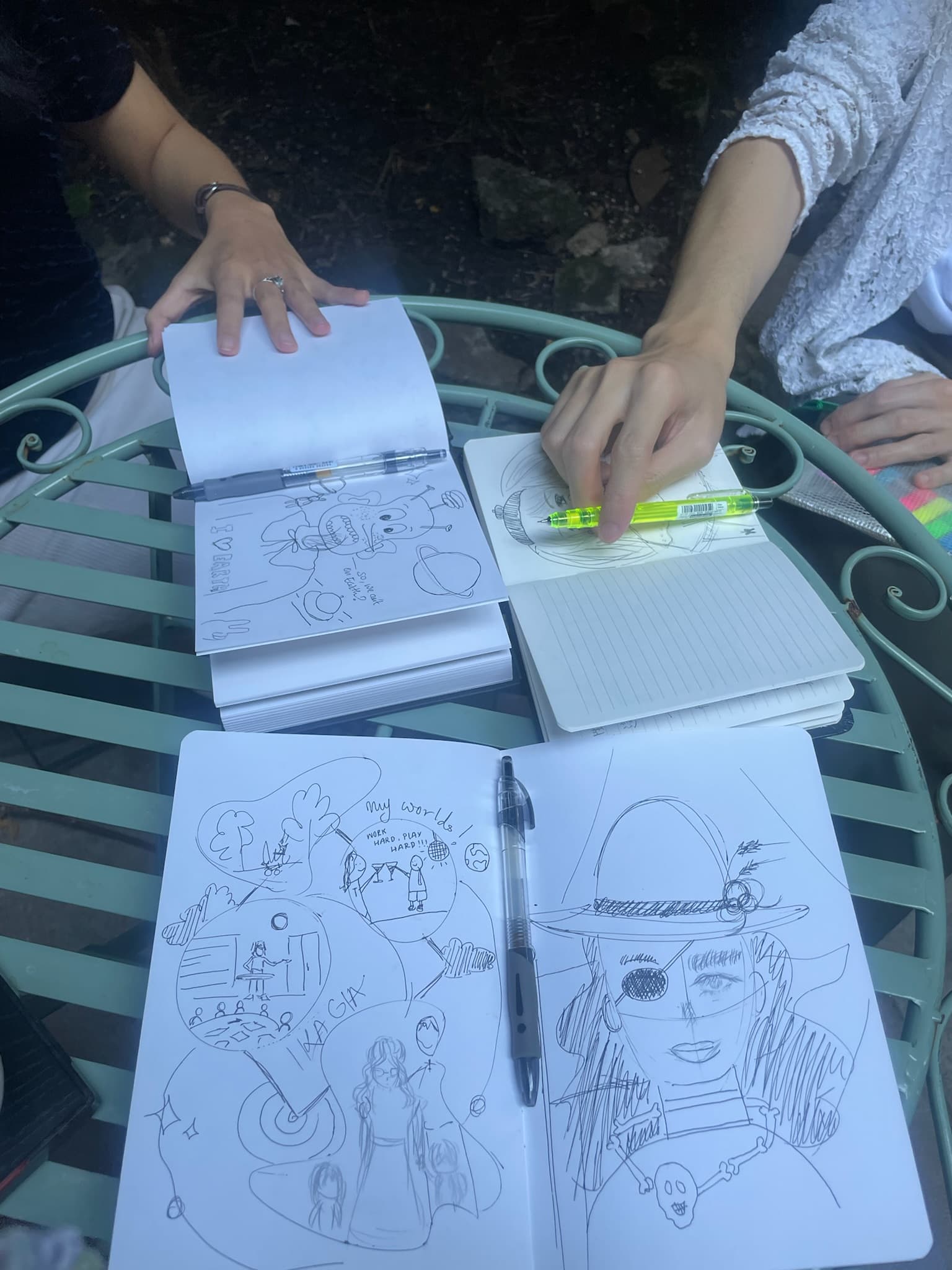
The four months of the project were packed tight. March: desk research, scoping, mapping the NHS system context, first interviews. April: ethnographic deep-dives, hospital observation, a young carers' forum, persona development. May: converging insights, reframing, three rounds of ideation, co-creation workshops with carers. June: prototyping, stakeholder validation, service blueprint. July: final validation, operating model, Theory of Change, presentation and documentation.
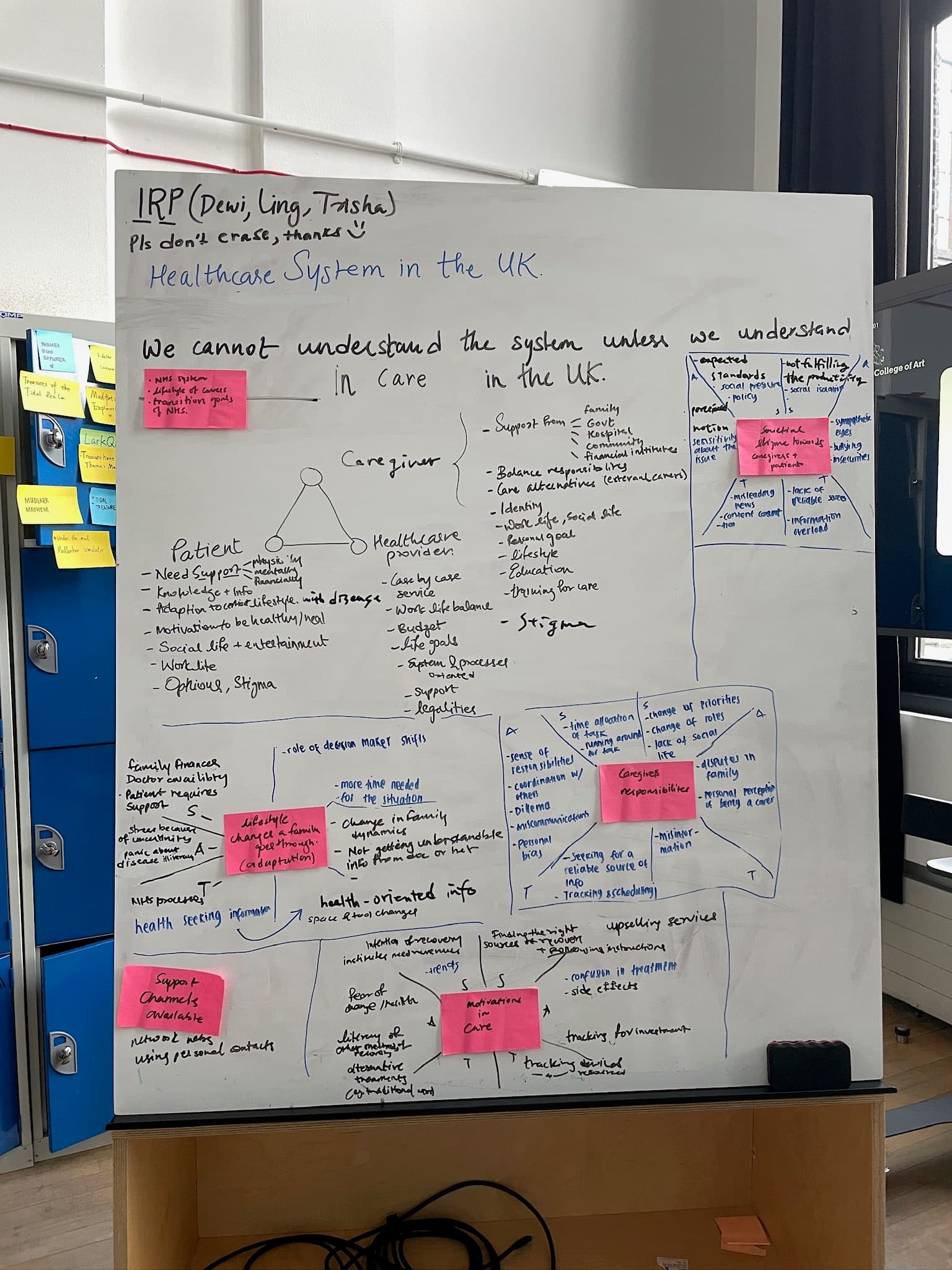
But once we had taken stock of our resources, we ran straight into a practical problem: as three international students, we had never lived in the UK and had no network or connections here. Anything we wanted to do would have to start from cold outreach.
April: A Letter to a Public Hospital
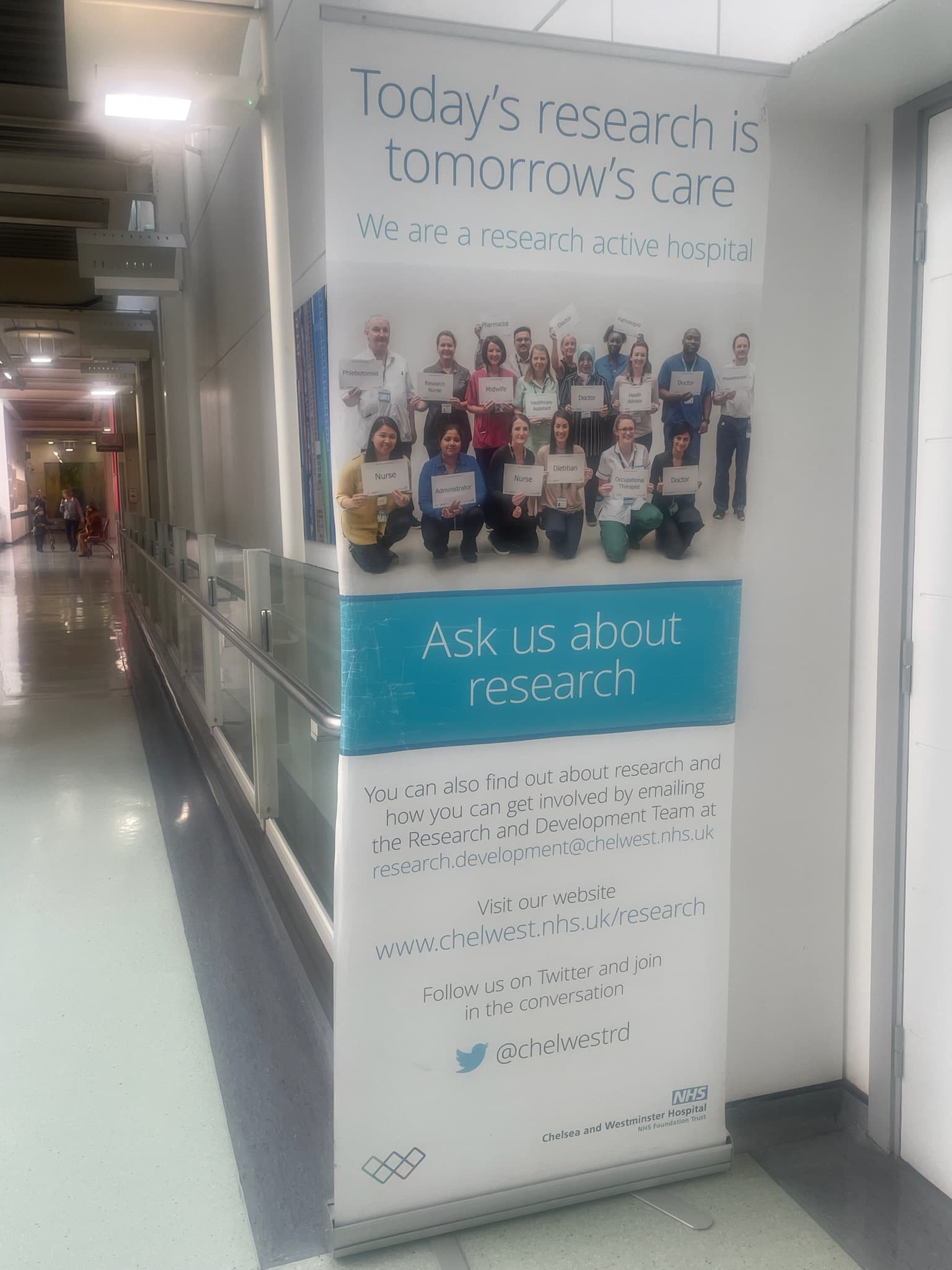
To understand the hospital discharge process, with nobody to make an introduction, we simply wrote to the Patient Experience Team at Chelsea and Westminster Hospital, and they wrote back and said yes. We went on site, shadowed the team through observation and interviews, then wandered the hospital watching how patients and their families moved through it.
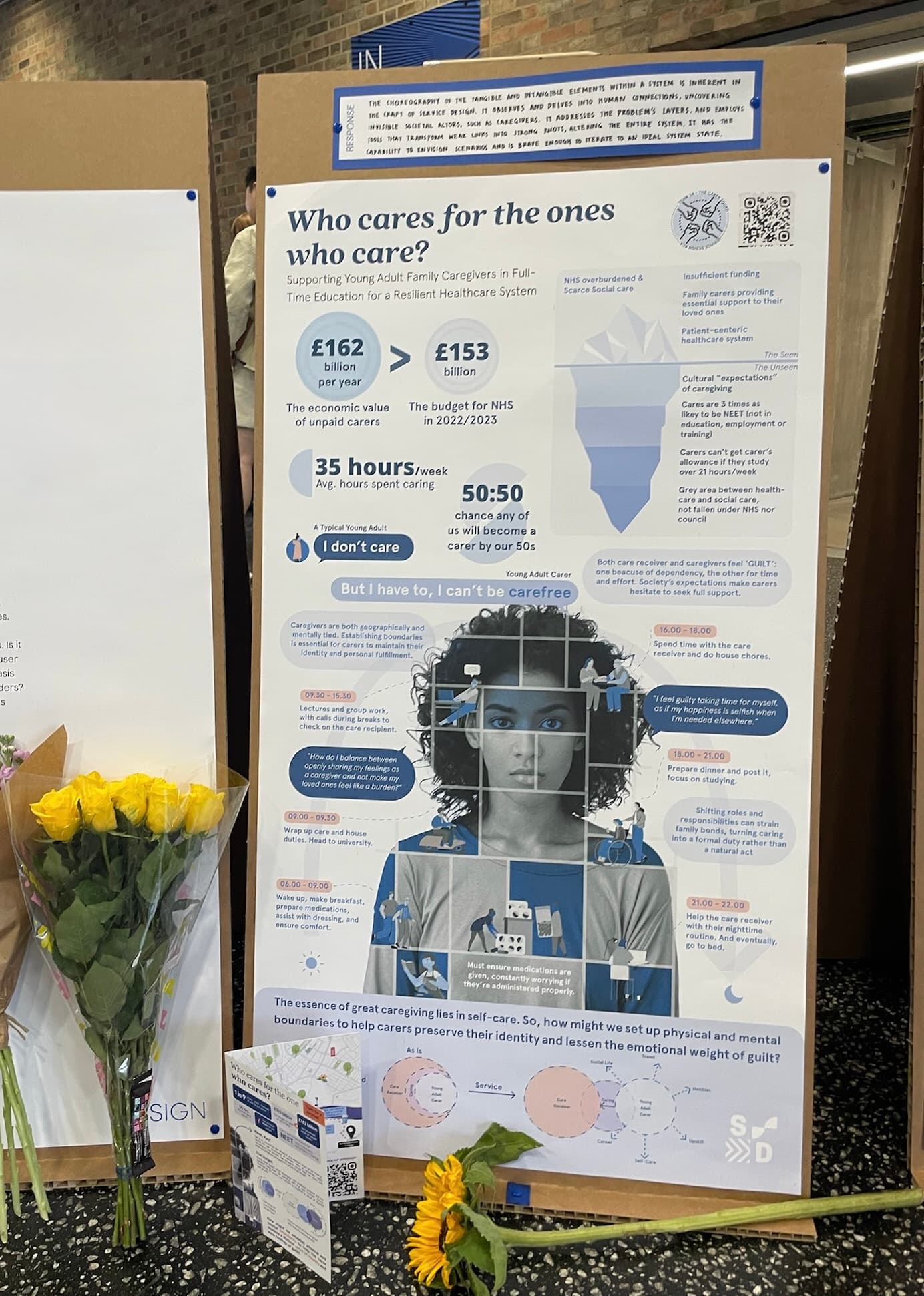
Across the research period we sat down and listened to the stories of 12 young carers, 5 NHS staff and 5 NGO partners, on top of the earlier desk research, the hospital fieldwork, and an online young carers' forum. For me the hardest part of the project's first half was this: turning a tangled mass of qualitative and quantitative data into something an audience could actually follow, and that carried the weight of the issue.
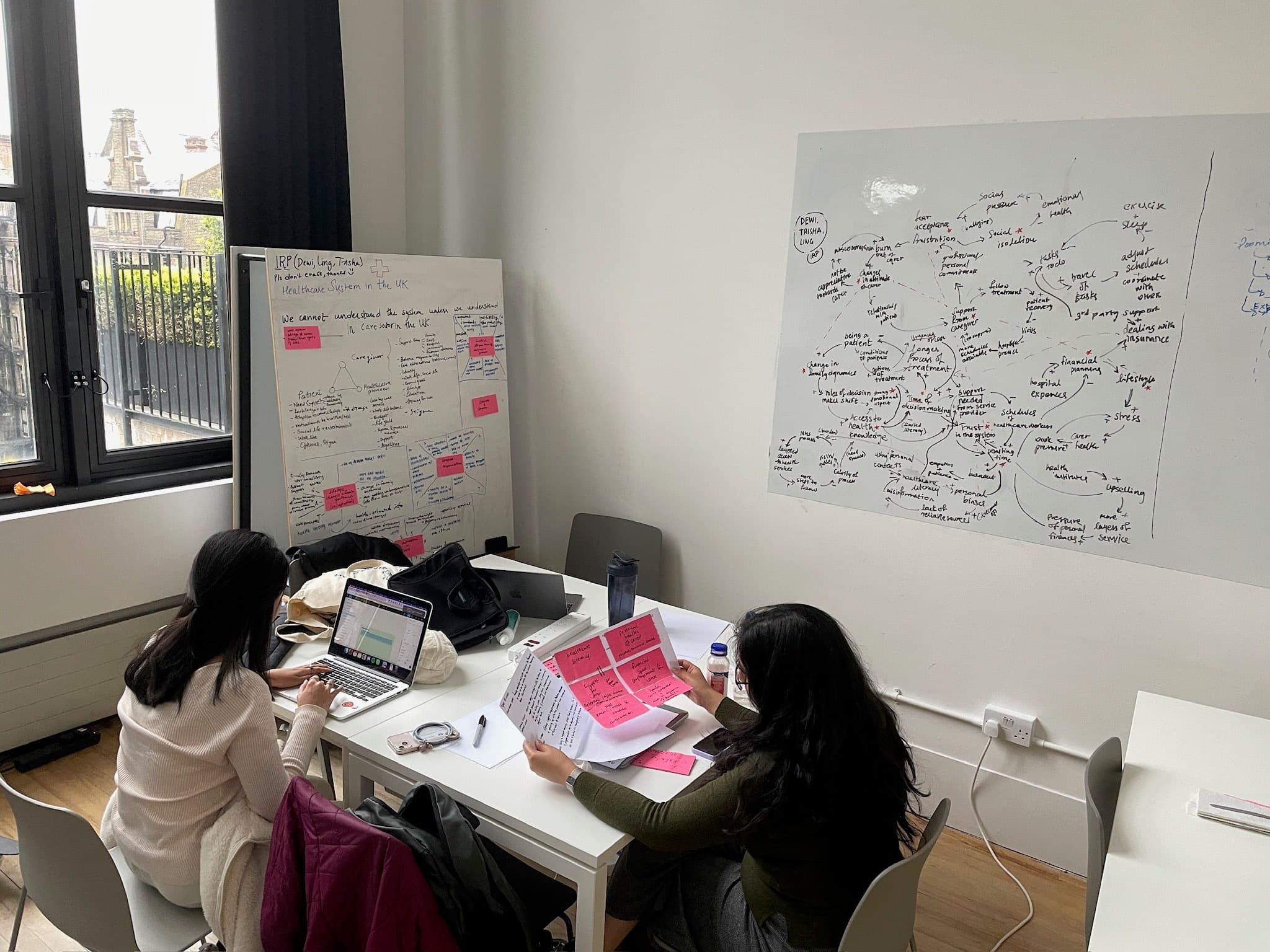
We ended up borrowing the consulting playbook: numbers and hypotheses up front, structured along MECE lines:
- Unpaid carers in the UK shoulder roughly £162 billion of economic value a year, more than the NHS's entire annual budget of £153 billion. If they collectively stopped, the whole health system would simply collapse.
- Among them are 600,000 young adult carers aged 18 to 25, spending an average of 35 hours a week caring for family. (The other side of it: by the time anyone reaches their fifties, there is a one-in-two chance of becoming someone who needs care.)
- Narrowing further to those who are also students, the support the system offers looks like this: full-time students studying more than 21 hours a week lose their Carer's Allowance; what a council social worker can offer is sometimes a dish-washing visit once a fortnight; and they are three times more likely than their peers to become NEET (not in education, employment or training).
The full research and synthesis lives on the project page. On the persona page of our proposal, we wrote this note: "People accusing me of using caring as an excuse for not showing up so many times."
We distilled the findings into a single question, and it became our design brief — how might we create moments of respite within young adult carers' daily routines?
May: Three Rounds Torn Down and Rebuilt
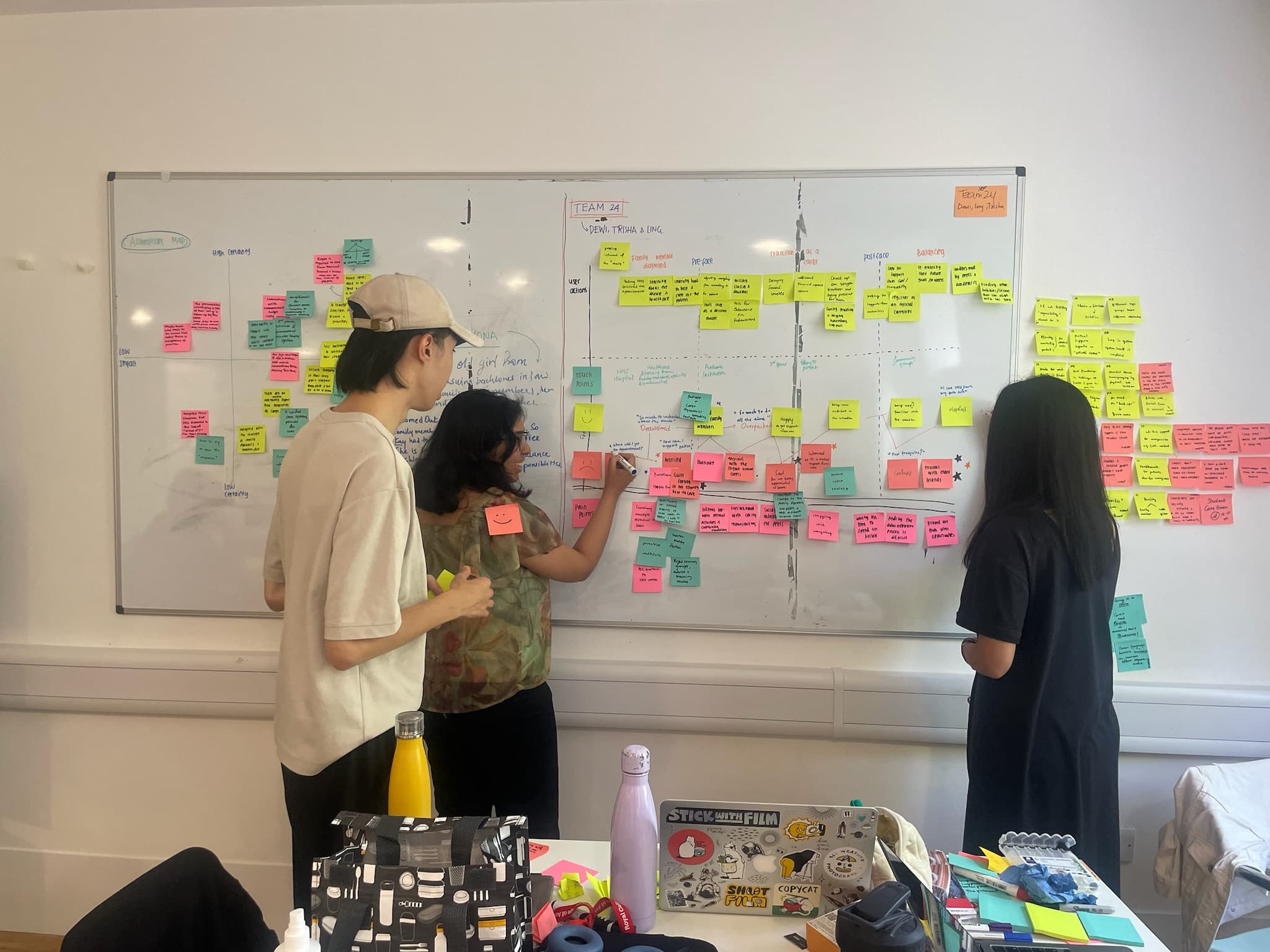
With the design brief set, our ideation ran three rounds, and every one of them was knocked down by real feedback. In my final-presentation script I had compressed the three into one line each: "carer connect, realised it being too intimidating", "care officer role inside council, soon validated that it is far from practice", "finally to grass root supporting event".
Rounds One and Two: Trust Your Designer's Instinct, Drop the Wrong Ideas
The first version tried to connect young carers with each other. But after talking with several carers, we realised the real need behind social connection was respite, and carers, like everyone else, actually wanted more of the world outside their caring duties. In the final report we wrote "the direct connection might be too intimidating for carers": put carers in a room together and the conversation is still about caring responsibilities, which is simply too much pressure.
The second version went top-down: a care officer role inside the local council, close work with NGOs to roll out toolkits, and so on. A grand idea, and it died after validation with carers' organisations. The reasons came in two layers. Practically, opening a headcount inside the public sector, or launching anything brand new there, has far too high a barrier to land. More fundamentally, "the gap is not due to a lack of support" — the gap exists not because there are too few layers of support, but because carers don't show up to use them in the first place.
Funnily enough, our tutor Alessio was genuinely puzzled that we dropped this idea, and told us bluntly that we shouldn't go safe. As an aside: from team formation to final submission, the three of us never once fought; the real friction sat between us and Alessio the whole way. He teaches on a different programme, Design Futures, and we felt he never quite understood where we wanted to go; his feedback wasn't constructive enough to move us forward. He is a professional and genuinely impressive teacher; we just never fully aligned on certain things.
Round Three: Exhaust Everything, and the Spark Arrives
What actually pushed the project over the line was a whole-cohort progress crit in mid-June. Richard, one of the most senior tutors on the Service Design programme, listened to our work and delivered a string of comments. I scribbled them down on the spot (kept as scribbled, typos included):
- the statistics need to be told more clearly, otherwise it's just "run another NHS"
- the young carers are born in a "culture of care", as they grow up other cultures come in
- it's about a relationship, look at cases of designing relationships, like communities and marriage counselling
Then he landed on grassroots design, his reasoning being that the sheer number of young carers was itself the advantage, and threw out a chain of concepts: "mobilising grassroots", "design a movement", "From object to attitude", "Terminology does not matters, context matters". The upshot: our proposal at the time was just another layer of "design" stacked onto the existing system, when what we should build was not another object or institution but a bottom-up, community-driven mechanism.
After that we turned harder towards carers as a community, digging for the hidden commonalities we had never paid attention to, and only then noticed an intervention point hiding inside student carers' double identity: the commute they make every day, between school (their own social identity) and home (their caring responsibility).
June: Carerou Takes Shape
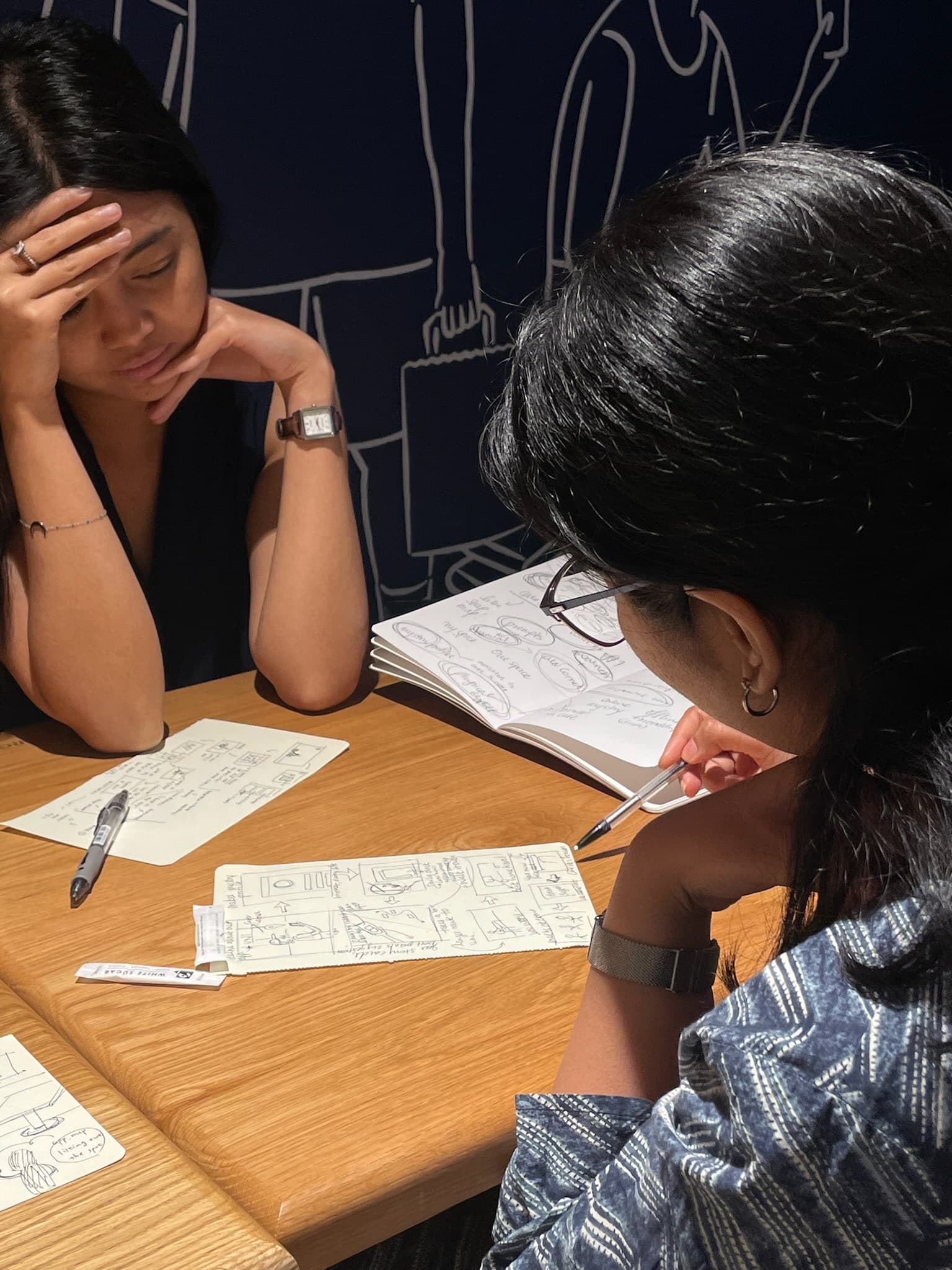
The moment I remember most vividly from the whole project was the final brainstorm, when the name got locked in.
Carerou — Carer plus Route.
I later compressed it into one line for my CV and portfolio: "Combining 'city wanderers' and 'self assessment' ideas, we made Carerou." It was the merger of the two ideas that survived the ideation pool: city wandering, plus a carer's self check-in.
The concept began as an adventure map plus the unused pockets of the neighbourhood, guiding routes towards carer corners set up inside local businesses like nearby cafés; small gifts could then fold into the route design as a gamified experience; and the paired reflection prompts would let carers log their own state within fragments of travel time.
Make behaviour change in a natural way — take a small detour on the daily path, and give yourself a pocket of time.
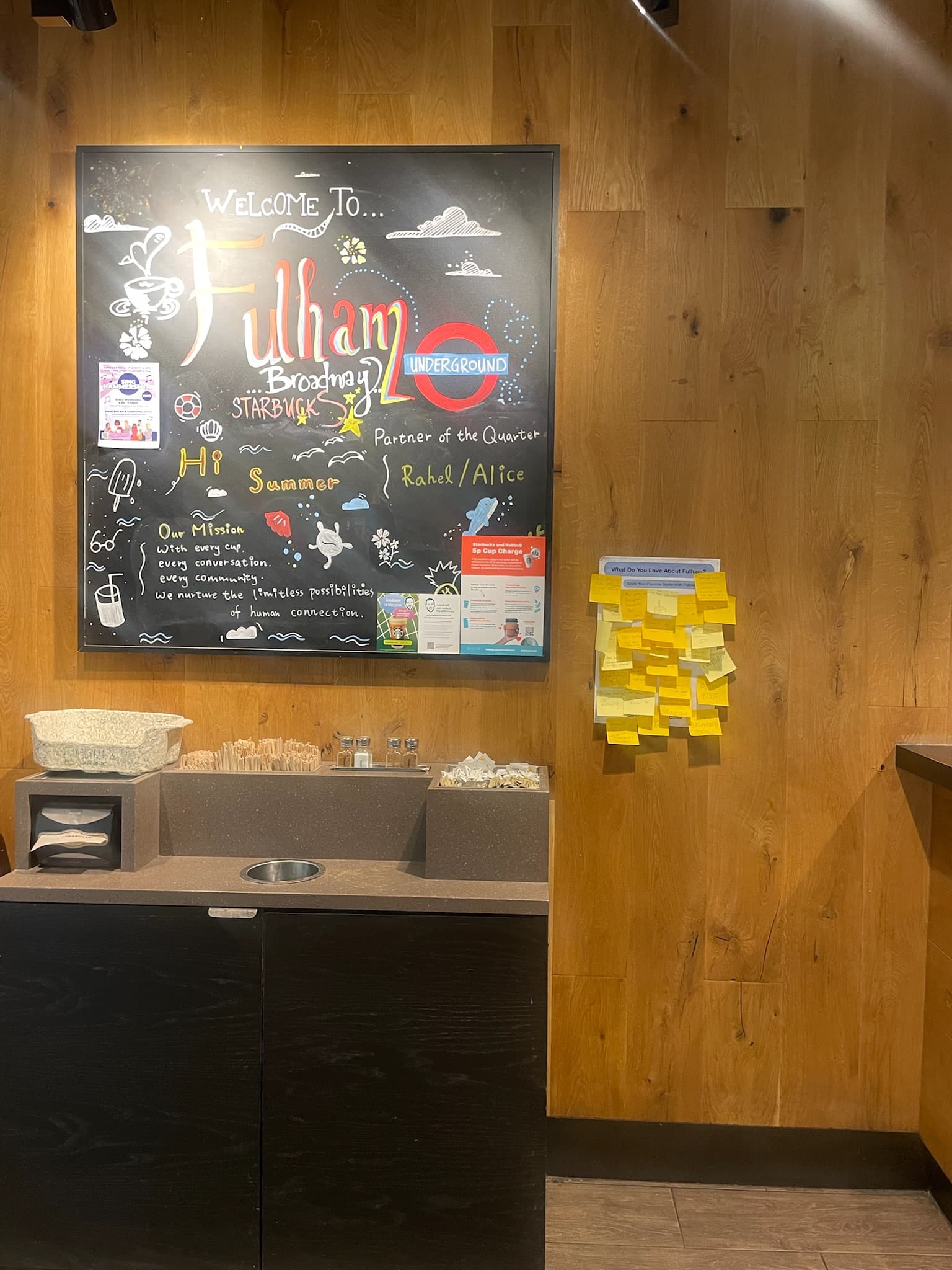
Our testing was decidedly scrappy. For the carer corners we went out asking physical venues to work with us, and landed Starbucks Fulham Broadway and the RCA Cafe. No budget, no formal partnership framework: just asking, then testing at very low cost.
For the walking experience we made a paper worksheet and asked a few friends to actually practise the act of taking a detour, tested across three durations of 3 days, 5 days and a week, then brought everyone back for a sharing session. That fieldwork gave us physical usage data and tested how detouring relates to mindfulness and self-reflection. We delivered a high-fidelity wireframe at the end, validated afterwards with several charities and carers.
July: Final Presentation and the Graduation Show
Final presentation on 21 July: an internal crit, three tutors from the programme plus the entire cohort. My script opened with "Our design journey has been in a continuous loop", and I think that genuinely echoed how the project had iterated across those four months.
The core statement of our presentation was "We turn fragmented transportation into quality me time". Then at the graduation show we printed a physical zine for visitors to take away, paired it with the app prototype, and designed a route for the walk from the Battersea campus to the nearest tube station, so that even visitors who weren't carers could step through the flow we had designed. You could say we spent a term designing the "detour" experience, and in the end it really was walked, on foot, by our visitors.
The show closed, the IRP went in, and with that the one-year master's was more or less done. Graduation ceremony at the end of September; after that came job hunting, moving flats, and the question of whether to stay in London.
Looking back from 2026, June, the densest stretch of ideation, was also my worst patch of that year: preparing to move, a break-up, and the stay-or-leave question, all stacked into the same weeks. Flipping through my heptabase, I found what the 28-June me wrote in the journal: the most annoying thing about being an adult is probably that when your personal life hands you absolute shit, you still have to summon the patience and pull yourself together for work. But I suppose that is just what life is.
A bit of a truism, but that was pretty much it: you just get on with it.
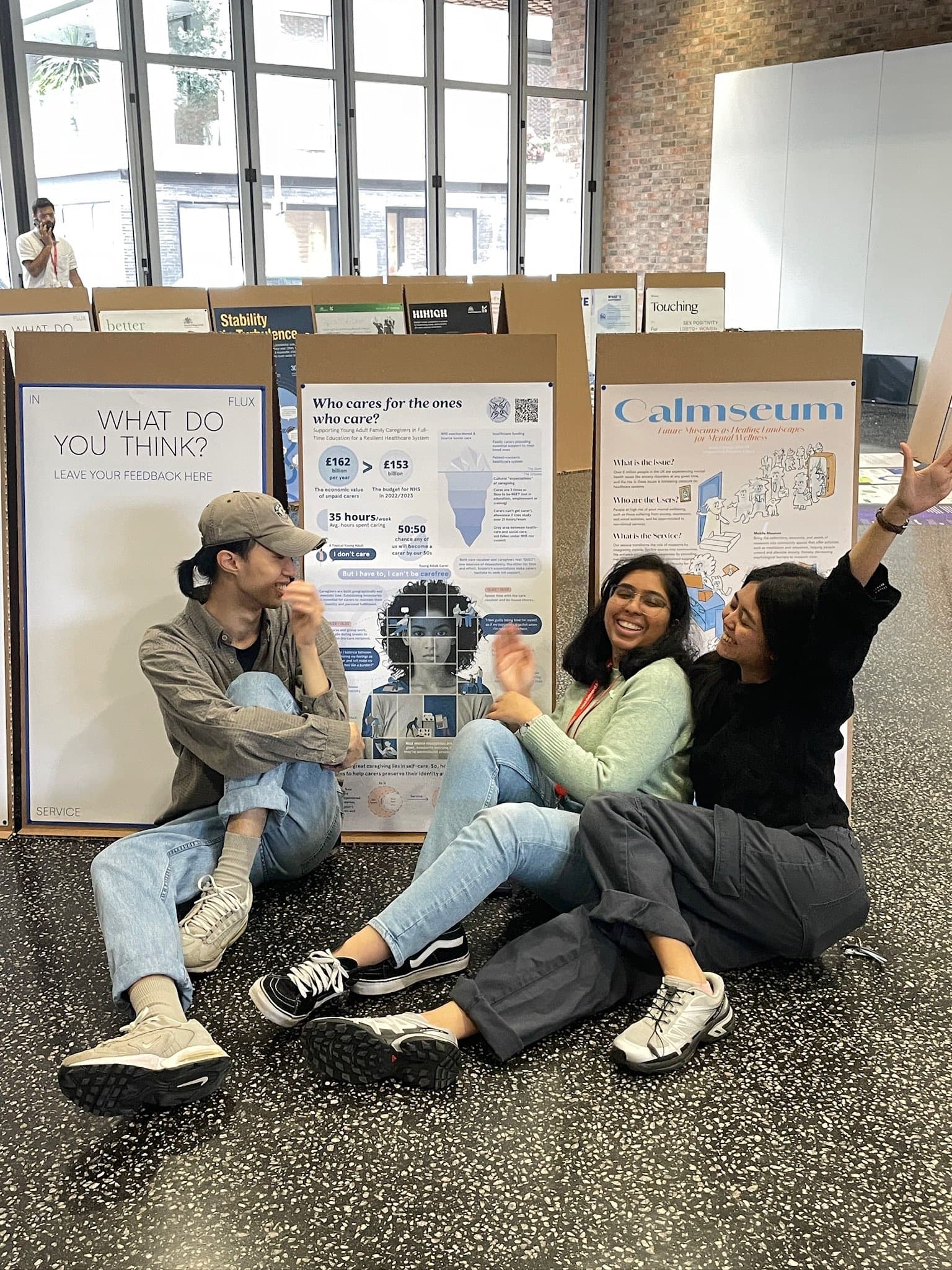
As for where everyone landed: Dewi is now a service designer at a healthcare consultancy in Sweden, Trisha does design research at an IT consultancy in London, and I have, as of 2026, been at Zeabur for a year and a half. One business grad out of National Taiwan University — why service design, how the RCA application went, what the year itself was like, and the project that closed it out. Thanks for reading — the series ends here.