
A Tuesday afternoon, second floor of the old office, the desk just outside the cat room. Phillip opened an extraordinarily detailed slide deck and walked me through the entire architecture of SEO — from keyword research to on-page optimisation, structured data, meta tags. It was my first ever one-to-one, and the first time in my career that someone sat down and systematically dismantled a skill for me, piece by piece.
I cannot recall the specifics of those slides, but the scene has never left me.
Four years of business school — I took marketing, I took consumer behaviour — yet the distance between those courses and actually doing marketing in a technology company was roughly the distance between reading a recipe and never having set foot in a kitchen.
A friend, Beatrice, forwarded me the Oursky job listing. I did some homework before the interview. After an hour-long conversation with Phillip, it was settled — he was the first and only marketer in the entire organisation. Before I joined, he had been a one-man operation, building from nothing to prove that marketing had a right to exist inside an engineering-driven B2B company.
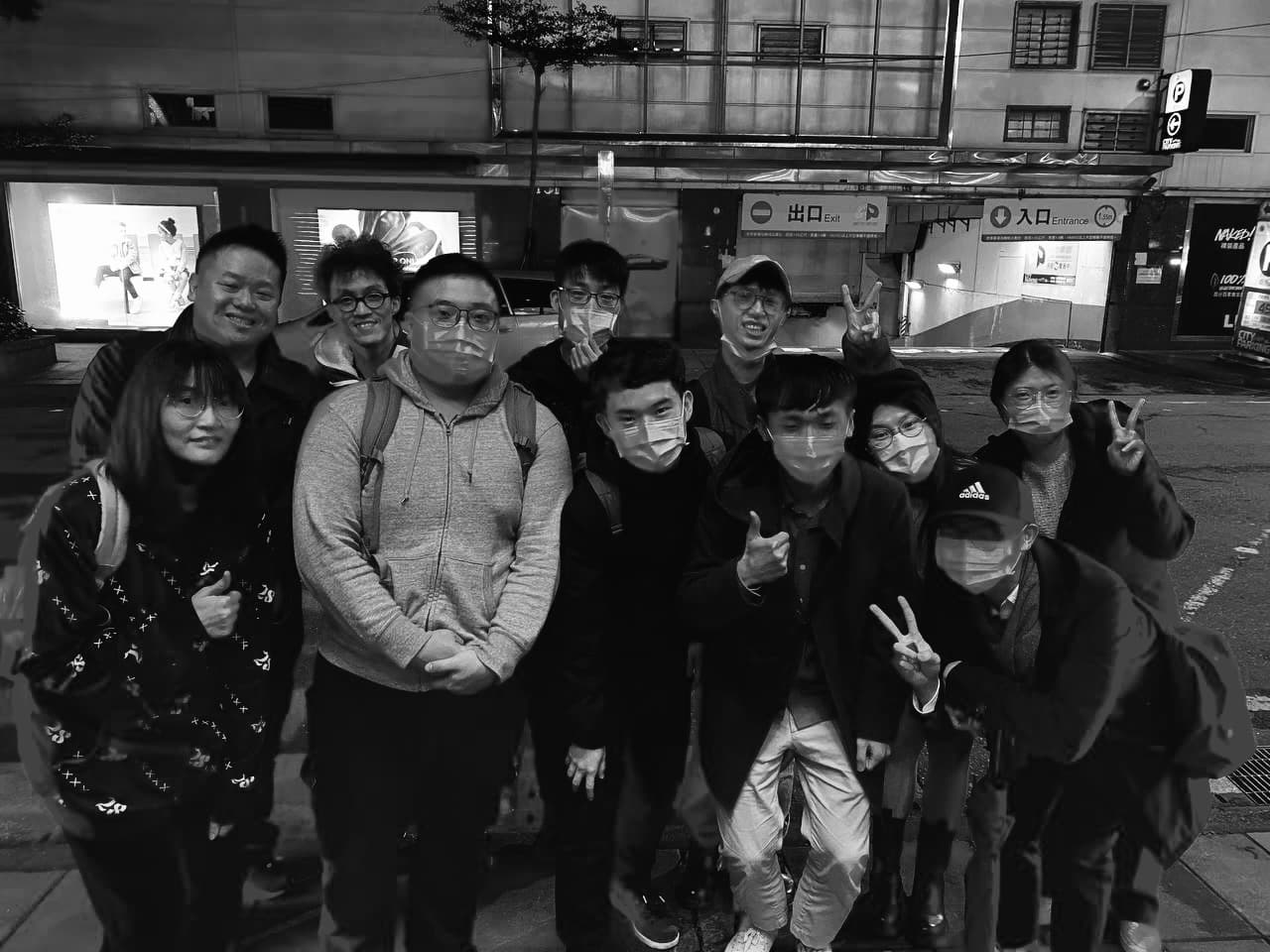
Oursky was a Hong Kong-founded firm that had maintained a Taipei office for years, with two core products: FormX (OCR — optical character recognition) and Authgear (authentication). The company's DNA was engineering-driven; its development processes were mature, its sales team ran a well-oiled pipeline — but marketing was still taking shape.
I did not know it then, but this was an exceptionally good place to start.
At Oursky I came to understand something fundamental for the first time: in an organisation like this, marketing does not exist as an independent department — it exists as sales enablement.
The term surfaces constantly in B2B SaaS. The typical trigger for establishing a marketing function is that the company already has a strong, mature sales team, but sales alone has hit its ceiling for sourcing new clients — and so marketing is brought in to widen the top of the funnel, to channel the right prospects into the sales team's hands for conversion. The point of enablement is amplification, not replacement.
In practical terms, marketing's job was to pull prospective clients into the top of the funnel; those names would enter the pipeline, pass through MQL qualification, get pushed down to SQL, and only then reach the sales team. What Phillip tracked relentlessly was the conversion rate between MQL and SQL — that single number told you whether marketing was genuinely accelerating sales or merely generating noise.
The reality, though, was that a nascent department inside a company with an established sales apparatus had limited leverage. More often than not, marketing's direction and priorities were steered by the sales team — whatever segments they wanted pushed, whatever angles they deemed important, marketing pivoted accordingly. Content got produced, ads got run. At its core, this was still a problem of inter-departmental collaboration and power dynamics.
Back to that afternoon's SEO presentation.
What Phillip taught me was not merely what SEO is, but how to turn it into an executable process. Start with keyword research in Ahrefs — find the sweet spot between search volume and competition; then plan content around those keywords and write blog posts. I wrote fifteen during my time at Oursky, and none of them were thrown together carelessly. From topic selection to structure, keyword placement to post-publication performance tracking, every step followed a deliberate logic.
The technical side I learnt there as well. Structured data, meta tags, HTML tag optimisation — these sound like an engineer's concern, but in a B2B SaaS company, a marketer who refuses to touch technical SEO is fighting with half an arsenal.
Then there was the pairing of Search Console with Google Analytics, visualising the data through Looker Studio so the team could actually see what marketing had done and what it had brought in. Organic traffic to the US market grew 52% over that period — not through luck, but through the accumulation of every article, every meta description, every backlink methodically built.
Beyond SEO, the other foundational skill I developed at Oursky was newsletters and drip marketing.
Using MailChimp and Mailerlite, I designed drip campaigns — automated sequences that send content to a prospect at preset intervals and conditions once they enter the list. This was not scattershot; every subject line, every piece of content, every send time had to be designed with intention. We ran A/B tests simultaneously, comparing different versions of headlines and copy to determine which combination yielded higher open rates and click-through rates.
Over the months that followed, open rates and conversion rates both showed steady growth. The numbers themselves are not the point — the point is that for the first time I experienced marketing as something that could be tracked and iterated link by link; every email sent was not an ending but the starting point of the next round of optimisation.
Every day I showed up, every meeting I sat in on, I could sense Phillip was carrying more than his title required — though at the time I could only vaguely feel the weight of it. It was not until Revere, and now Zeabur, that I truly understood what it means to hold a department together on your own — the title does not come first; you do the work first, and the title follows.
I left Oursky when my conscription date arrived.
I enlisted on February fourteenth. The next day I received my RCA confirmation letter — excitedly shared it with the soldier in the bunk next to mine. Probably the most ill-timed good news in the entire barracks.
Three months of military service, in Kaohsiung. Arriving half a day early before reporting back, sitting at the Pier-2 dock watching the sea — that was probably the first time I realised how much I loved looking at the ocean.

On free days I would wander over to KMFA as well. I had not yet been to London, had not yet developed the habit of visiting exhibitions, but I had probably already discovered that I was the sort of person who drifts towards art museums whenever there is nothing else to do.

After military service, I was preparing for my master's in London; we tried continuing on a contract basis, paid per article, but the time difference between London and Taipei made collaboration nearly impossible, and eventually we stopped.
Looking back now, Oursky was where my marketing fundamentals were forged. The logic of SEO, the architecture of newsletters, how a marketing funnel operates, how to track through a CRM — all of it followed me to Revere, followed me to London, followed me to Zeabur where I am now.
But perhaps the most important thing was not any single skill. It was that I understood, for the first time, what marketing means inside a technology company: not branding, not creative — but building a system. A system that can be measured, tracked, and iterated upon. What Phillip taught me was not how to write a good article, but how to make an article into a brick in the funnel.
And that concept of sales enablement — truthfully, I merely knew the term back then; I had not yet felt its weight. It was not until Zeabur, when I had to build marketing from zero myself, that I truly understood: marketing untethered from business objectives is motion without progress.

Perhaps all fundamentals work this way. You learn them and believe you understand; you practise them and discover you only grasped the surface. It is not until much later — in an entirely different context, facing the same thing again — that you finally comprehend what that first lesson was really teaching you.