
Building in the cracks.
Innovating inside a large organisation is like knocking down a wall in a house that's been standing for thirty years. There might be a better layout behind it, but you're not sure if it's a load-bearing wall — and the people living inside don't necessarily think it needs to come down.
That's the deepest thing I took away from working at Revere.
I never imagined I'd be working in the funeral industry at 23 — in a sector where the average age is 40. And according to the chairman, the industry hasn't even peaked yet. Just look at the population pyramid and where the boomers sit. (Cracking dark jokes at the door of a columbarium.)
Revere was a digital venture under the Chin Pao San Group. Chin Pao San is the leading funeral conglomerate in Taiwan — arguably across APAC — built over decades on deep personal networks and a sales-driven system. The industry is highly closed-off and barely digitalised. All trust is built between people, not through a button on an interface.
But Chin Pao San decided to give it a try. They wanted to build a digital product that would redefine the memorial experience — not just cemeteries and funeral services, but using technology to extend how people remember those they've lost. Revere was the name of that attempt.
When I joined, it was still a blank page.

My role was closest to a Founder's Associate — right next to CEO Jess, touching everything. But because I was simultaneously sitting in on board-level strategy meetings, pushing execution on the product side, and working through cost structures with Jess, you could also read it as Venture Architect. In a venture starting from zero, the boundaries of a role were always blurry.
What this meant was: someone two years out of university was directly plugged into the highest decision-making layer of the entire business. That doesn't happen in a mature organisation. You'd normally have to climb to mid-senior before you even get near those conversations. But in a venture like Revere, starting from nothing, there was no ladder to climb — when something came, you just had to catch it.
The 0-to-1 phase was chaos. And we couldn't even see where 0.5 was.
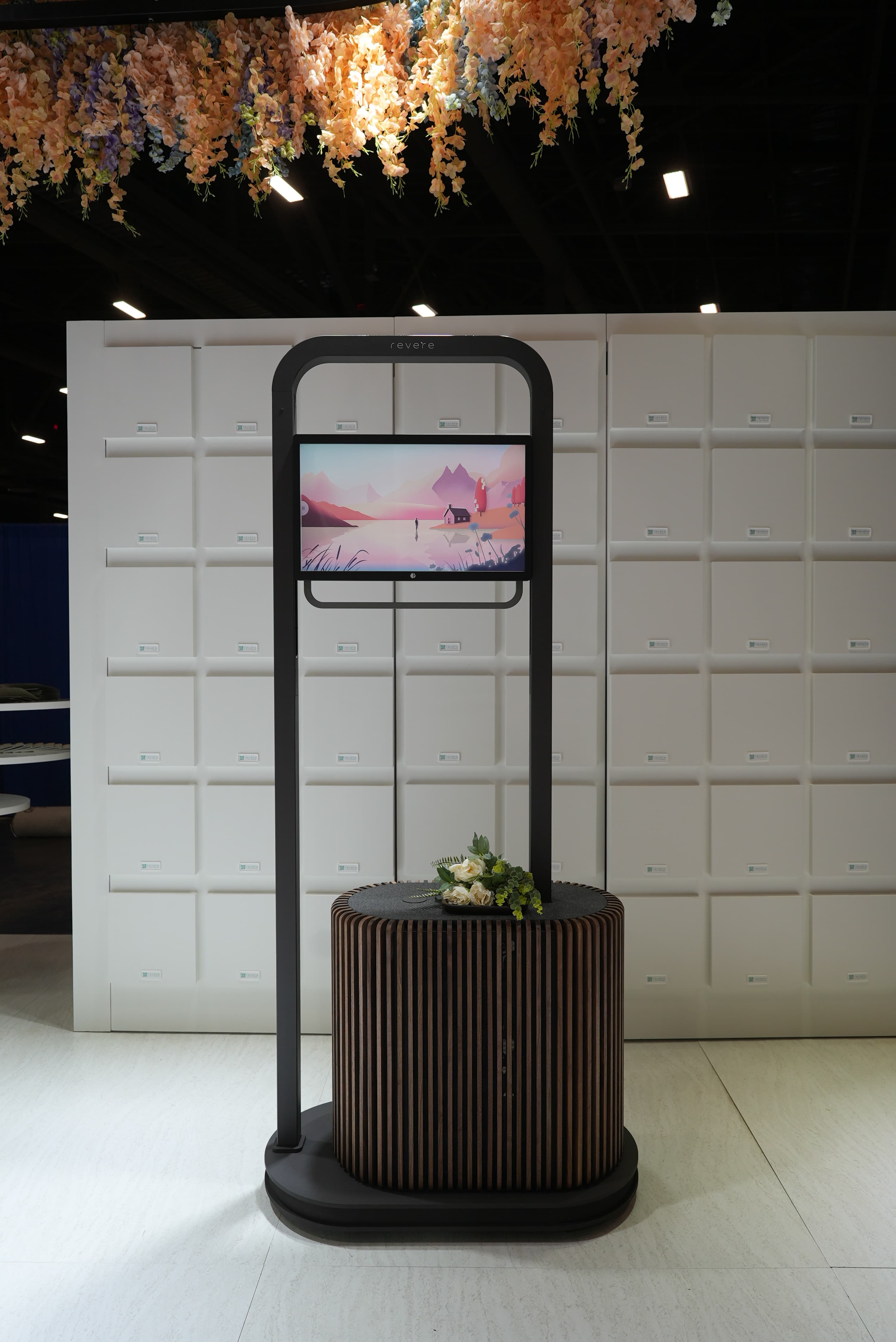
I joined Revere for one thing: to build the MVP within three months and ship it to the NFDA trade show in Las Vegas. Behind that goal was a bigger commercial logic — Chin Pao San was laying out four strategic lines at the time:
- End-of-life insurance
- Hospice care
- Green burial: the Recompose partnership
- Digital memorialisation: Revere, my main mission
Revere was the vehicle for the fourth line, and simultaneously the window through which the entire group would showcase its capacity for innovation. To push this strategic vision forward, Chin Pao San established a holding group — Revere operated as a venture under it.
I didn't touch the first two lines, but I helped push green burial forward from the side. We were in talks with an American startup called Recompose, planning to sign an MOU to bring their technology to Taiwan. What Recompose does is Human Composting — formally called Natural Organic Reduction — using microbes in wood chips, alfalfa, and straw to transform a human body into soil over roughly eight to twelve weeks.
Contained, accelerated conversion of human remains to soil.
This is fundamentally different from what Taiwan currently calls "eco-burial." Taiwan's eco-burial options — tree burial, flower burial, sea burial — are still ways of handling cremated ashes. They just change where the ashes end up. Human Composting replaces cremation entirely. The process uses 87% less energy than traditional burial or cremation and saves one metric ton of carbon emissions per person. The body isn't burned — it actually returns to the earth.
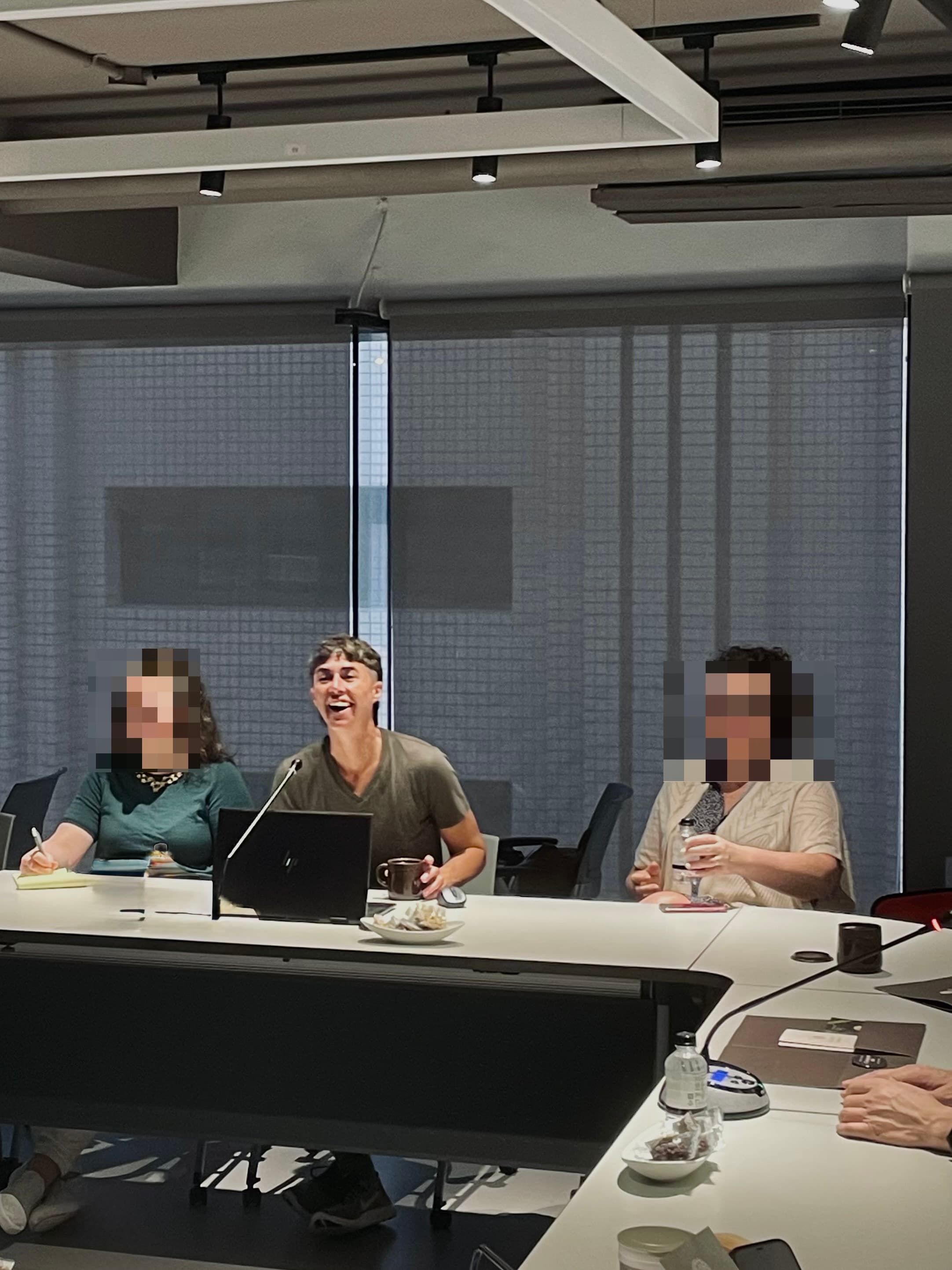
But the moral and legal landscape around this is still a massive legal-product fit problem. Katrina started pushing for this in 2014. It wasn't until 2019 that Washington became the first state in the world to legalise it. As of now, only thirteen US states have passed legislation, with the Catholic Church and parts of the funeral industry consistently lobbying against it in state legislatures. More than twelve years since Katrina first started, and this road is far from over.
Katrina and her partner have two adopted kids — side note, those kids are ridiculously good-looking.
Katrina is a woman, and she's queer. I don't mean to spotlight the identity as something special, but the reality is: in an extremely conservative industry like funeral services, the resistance she carries is far greater than what a straight male founder would face. In a way, she herself is also navigating a kind of legal-product fit — it's not just the technology she's pushing that needs to be legalised state by state. Her very way of existing as a person hasn't been fully held by the system in many places either.
Three months, but everything happened at once. Product sprints were running, patents needed filing, factories were producing samples, overseas logistics had to be arranged, partnership deals were being negotiated — managing roughly a hundred thousand dollars in project budget, with ten to twenty things moving at any given time, all flowing through me.
At that pace, the hardest thing isn't capability. It's prioritisation.
It's not just about whether something is important. You also have to weigh urgency and execution cost — not just on your end, but how many people, processes, and how much time it pulls across the entire team. Accounting approval takes two weeks. Factory sampling takes three. Patent timelines are even longer. When all of that stacks up, your time granularity isn't "days" — it's "half-hours."
And so much of it is unplanned. Something breaks in one part of the chain. The person on the execution side knows there's a problem, but doesn't know what it means for the big picture — so the information lands on you first. I had to digest, assess, and give a clear call within five minutes, then decide whether this was something I could handle or whether it needed to go up.
The most important thing I learned from Jess was how to manage stakeholders.

Upward, she taught me how to anchor on what the chairman cared about — his values and goals — then use that frame to communicate: what's feasible, what's not, why we can't get there yet given current resources and time, but where we can get to for now. Not saying no — saying: given these conditions, this is the best version we can deliver.
Downward, she showed me how to break a grand plan into phased milestones, so each sub-team knew what to deliver and what "good enough" looked like. Marketing to here, product development to there, sales to that point — each line with its own measure.
But the hardest part to learn was the calibration of "managing up." When to absorb it yourself, when to escalate. It's not just a judgement call — it's a trust question. How much decision-making authority your manager gives you depends on the quality of every single delivery you've made before. Expectation management, task completion rate, timing and format of reporting — these small things accumulate into what people call team trust.
But innovating under a traditional conglomerate — some things you just can't push through no matter how hard you try.

I was the only person pushing something new, or one of very few. Other departments didn't understand what I was doing — some even thought I was wasting time, slowing them down. When something new hits an established body, pushback is inevitable — not out of malice, but inertia. A system that's been running for decades has its own logic. Ask it to change, and it will first ask: why?
Looking back, I didn't do everything right either. I was too focused on execution and didn't spend enough time cultivating cross-departmental relationships. I thought doing good work was enough. But in an organisation with complex political structures, good work is just the entry ticket. Getting people to understand what you're doing and why — that's the real engineering.
The web of stakeholders inside a traditional conglomerate was far more complex than I'd imagined. The chairman has a chief of staff, the chief of staff has an assistant, finance has their own assistant — each layer with its own logic and territory. It was basically a real-life Devil Wears Prada. And I was completely unaware at the time that in a structure like this, how a message travels, through whom, in what tone — every step is politics.
After leaving Revere, I went to London to study Service Design at the Royal College of Art. After graduating, I caught up with Jess, and also with Elle — the friend who took over my position — and learned what had happened to Revere.
Revere didn't make it to the end.
Not because of the product. Not because of the market. It was internal politics. The entrenched forces within the group ultimately overpowered the push for innovation. The product never made it to production — never went live, never hit the manufacturing line.
When I heard, I wasn't very surprised. But I still felt it was a shame. Not because some product didn't get made — but because of the people who poured themselves into it. The ones who genuinely believed this mattered, who gave their time and energy to push it forward, only to have their effort swallowed by a structural force far larger than them.
I thought of myself when I first joined, staring at that blank page, thinking anything was possible.
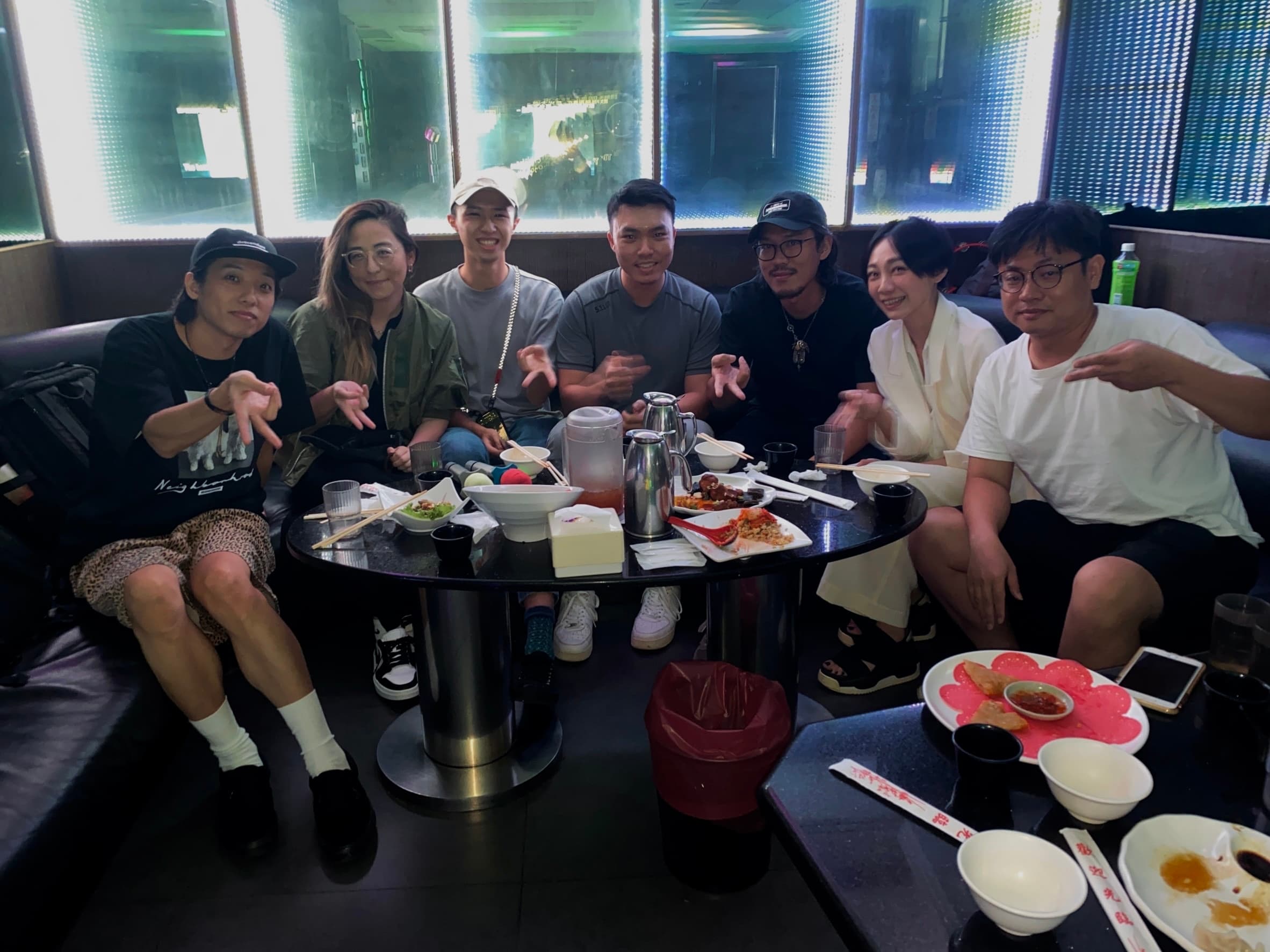
But I don't think that time was wasted.
I know clearly what all of it — the stakeholders, the messy-but-not-meaningless tasks — meant for my own growth. "Meaningless" is what it feels like when you think your work doesn't matter and you're wasting time and energy. But when you know the big picture, when you know every small thing ties back to something larger, it's not noise — it's material.
In that old house, we didn't manage to break through the wall. But I learned how to judge which wall can be knocked on, how to talk to the people living inside, and how to make a call in five minutes.
Those things carried me to every place that came after.
Postscript
Csikszentmihalyi wrote in Flow about a concept: people enter a state of total absorption when the level of challenge matches their skill level. Too easy, and you're bored. Too hard, and you're anxious. The right difficulty makes you lose track of time.
Looking back at those three months at Revere, I was in that state. Things were exploding, sure — but the goal was concrete enough. Ship the product to the US funeral trade show in three months. Every task, no matter how messy, was fundamentally about execution. Product to finish, logistics to arrange, booth to prepare — each with a verifiable endpoint. I knew exactly what I had to do every day, every week, because the finish line was right there. Just work backwards.
Another factor I didn't recognise at the time was tool familiarity. At Revere, everything I used — project management, budget tracking, presentations, stakeholder communication — I already knew well. When tools don't get in the way, all your mental bandwidth goes into pushing things forward. But at Zeabur, I stepped into an engineer-driven environment where many tools and languages were completely new. Just getting familiar ate into the bandwidth I could spend on strategic thinking. And that's still happening. Just this week, I've been forcing myself to switch to a Claude Code terminal-first workflow — consolidating operations that were scattered across different interfaces into one terminal-based flow. New tools that don't fit your hand will always chafe. New shoes will always bite. But that's all it is.

Thinking about this always brings me back to something. At Revere, I'll never forget how Jess looked when writing brand positioning and product strategy documents — weighing every word, going back and forth on tone and precision. That was the GPT 2.0 era. Everything was crafted one word at a time. Her husband is British, and she's an RCA alumna senior to me — I'd occasionally overhear the two of them debating whether a particular word was too strong or too weak. It's a scene that makes me smile now.
But as an executor at the time, I didn't truly grasp the difficulty of those documents. I saw a well-written document, but didn't realise how far "well-written" is from "precise." A positioning document isn't about prose — it's about thinking. Every word is a strategic choice, and I couldn't see any of those choices back then.
Now that I'm the one handling brand positioning and go-to-market strategy at Zeabur, I finally understand the weight of that document.
Lately I've had this constant feeling of being busy for nothing. Not because there's less to do — there's more. But the nature is different. I'm no longer dealing only with execution-level tasks, but with higher, more abstract goals — brand positioning, growth strategy, market direction. None of these have a trade show waiting in three months. There's no clear finish line to work backwards from.
And the tasks that flow from these goals require something beyond execution: they require evaluation before execution. Should I do this, is it worth doing, how do I measure it afterward — these questions alone consume enormous mental energy, before I've even started.
Flow hasn't disappeared, but the shape of the challenge has changed. From a sprint where I could go all out, to a long-distance run where I'm still looking for the finish line. The balance between skill and challenge has been disrupted — not gone, just in need of recalibration on a new dimension.
I'm still finding that new balance.