決定申請碩士的那天,是某個我姑且用案牘勞形稱之的晚上,我開了一頁全新的 Notion 一步步把腦袋裡對設計碩士的想像列成執行清單,當然時至今日、甚至直接用 Claude 做 web search 後寫成 md 文件會更快,不過我相信手段的不同只是影響做好一件事的效率,品質至少於我而言還是在於人的決策。
這篇寫給所有正在考慮或準備申請 RCA Service Design 的人,這不只是很浮濫的一篇「啊我申請上了,所以我來喜孜孜的分享」;剛好相反,在申請期間我權衡了很多不確定性,每個環節都一環扣一環,過程中若是兵役或獎學金出問題,我就會果斷捨棄碩士這個選項。
這是 2026 年我回顧當時紀錄時更新的,當年因為堉璘獎學金綁定的關係,我最後只申請了 RCA 一所,因此很多決策都是在「Now or never」的前提下做的——如果你正在多校並行申請,規劃的策略會很不一樣。至於我為什麼會從商管背景走到申請設計碩士這一步,來龍去脈寫在從商管到服務設計。
我如何申請上皇家藝術學院 MA Service Design
以下是完整的時間軸——從選校到拿到 offer,照當時實際發生的順序寫。
申請前 12-9 個月:選校
選校邏輯
如果你也卡在「該申哪幾間」這一步,我在最初就先撇除了學校本身、回頭檢視整個市場甚至是國家本身對設計產業的重視程度,以下是幾個我參考的維度:
- 學制長度——英國一年制、美國兩年制、歐洲國家則幾乎是一年半十八個月,將機會成本(少賺一年薪水、簽證年限、年齡)跟學費總額納入計算,我選一年制的 RCA
- 產業生態——服務設計這個概念是在英國規模化被運用的(但最初概念是從美國發起),design consultancy 的密度、公部門對設計的接納程度、畢業生的發展領域,和幾個前輩聊過後我決定還是英國
- 課程哲學——RCA SD 偏向研究主導、social impact orientation;UAL(LCC)走的路線則更「創意」一些;Kingston 偏 product/UX,我一直以來都很想知道英國的公部門如 Policy Lab 及 BBC 等是怎麼做設計的,因此選 RCA
- 教學資源——看過去畢業生的專案(之前還有個 RCASD 的網站可以看 2021-2022 年的畢業生專案,現在網站沒人維護了)發現 RCA 的業界資源很多、涵蓋範圍很廣
實話實說,RCA 學費真的很貴。我入學當年是 33K 英鎊,一年制全日課程、180 學分、三個學期共四十五週。(我看近期 2026 年已經調整為三萬七千七百五十英鎊…)
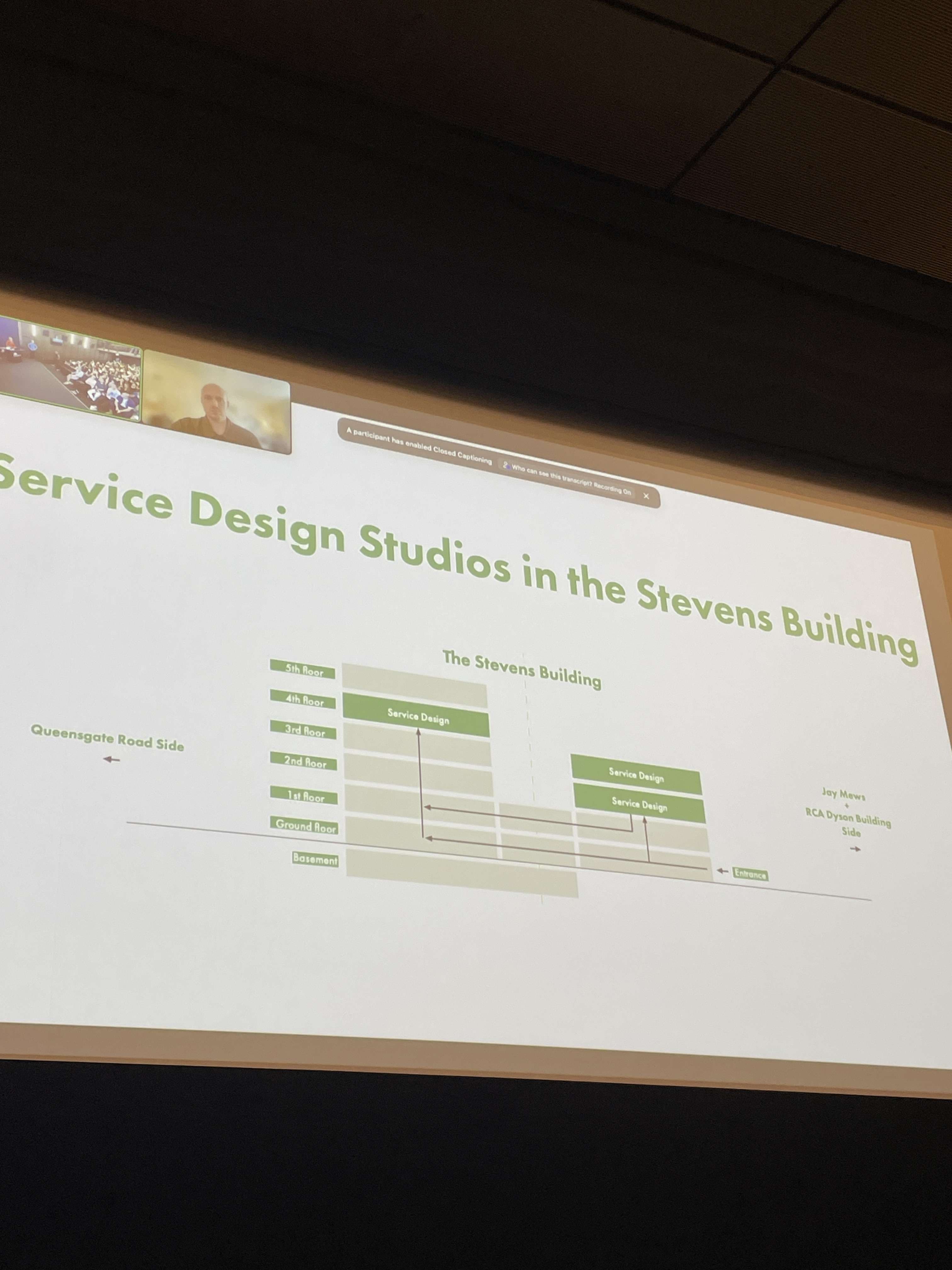
另外,我入學那年剛好碰上系主任 Head of Programme 換屆——前任主任 Clive Grinyer 宣布卸任,且這件事就在我們註冊後的第三天。我們整屆都對這個決定感到非常失望,其一因為 Clive 是業界大佬、RCA 的人脈資源可以說基本上都是刷他的臉獲得的。
這件事更抓馬的點是,後來我們這屆的系主任位置空了三四個月有吧,到第二學期才由另一位資深的教授 Qian Sun 接任。
題外話,我準備申請時臺大的學分還卡著一堂體育課,主要是為了堉璘計劃(下面會提到)的申請而做的選擇,後來發現這件事再延反而會卡到我當兵、進而影響我後續出國的安排,所以我後來 2022 年暑修了羽球、而後在學期間畢業。確認畢業後的那幾個月,我一邊在 Oursky 實習、一邊追區公所討兵單,所幸在隔年的一月提早入伍。
申請前 9-6 個月:材料準備期
RCA 的碩士申請需要透過校方線上 Applicant Portal 提交,每期有 4 個輪次、採 rolling basis 滿員即關,這個階段要生產出的材料:
- 作品集 Portfolio:三到五個檔案
- 申請動機 Personal Statement:300 字
- 研究計劃 Study Proposal / Interest of Research:1000 字
- 介紹影片 Motivation Video:兩分鐘以內(研究完其他間學校後,發現是 RCA 特有)
- 推薦信:學校會直接聯繫推薦人(雖然這樣說但我覺得肯定不會)
- 英語能力:非母語者 IELTS 6.5、各項不低於 5.5
作品集 Portfolio
我不是設計科班出身,也因此這步花費我最多心力雕琢,仔細糾結許久後才整理成適合自己的版本,我當初申請時的資料可以在專案頁面看到、但大部分是一段時間以前的資料。
我的作品集裡放的不是好看的視覺作品,而是包裝成設計師版本的專案紀錄。
對非本科申請者來說,最重要的不是「假裝你是設計師」,是 framing——怎麼把你過去做過的事情解構,改用設計的語言重新講一次:
- 你做過的研究 = user research / contextual inquiry
- 你做過的提案 = service blueprint / journey map / opportunity area
- 你做過的協作 = stakeholder management / co-creation
- 你做過的問題拆解 = problem framing / systems thinking
倒也不是把之前的東西硬套設計術語,是把自己當成設計師去敘述你過去的經驗,同時用你的受眾、設計系的教授們能理解的方式去傳達。
我自己是純商管背景出身——這在當時的申請者中很少見(後來錄取後我有稍微調查),所以也可能是我被錄取的一點。服務設計尤其看的是申請者能不能在真實世界裡解決問題,而不是能不能畫出漂亮的東西,因此商管背景在這個篩選下,從後設視角來看反而是資產而不是負債。
如果你也是非設計背景,不要花力氣模仿設計師的視覺語言,那個就是你的差異點。
我後來選擇最土炮的 Design Thinking 雙鑽石來作為敘事方法:問題是什麼 → 我怎麼研究 → 洞察是什麼 → 我設計了什麼 → 結果如何。作品集裡我最後選了「沒有設計系」的社群營運、松菸永續轉型專案、在 TR Lab 時輔導團隊做的品牌重塑專案以及另個系統設計的專案。
RCA 官方說他們看的是:你的專案是否挑戰了既有的東西、有沒有從使用者研究中挖出洞察、有沒有超越預期的創意、對實作和落地有沒有理解。用這四個維度去檢查每一個專案,能不能在每一條線上都拿出證據,其實就差不多了。
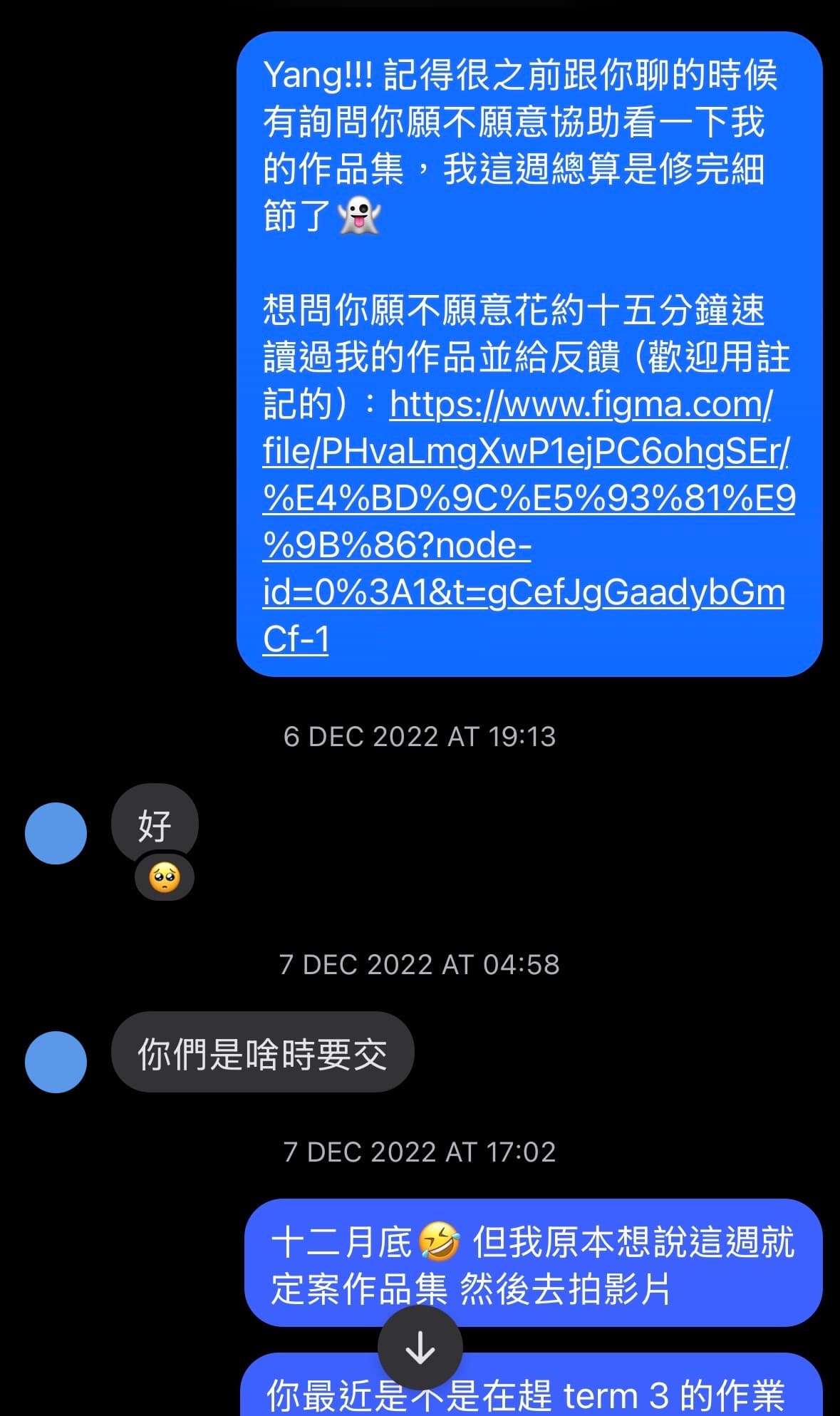
我那時跟另一位上屆的 Yang 請益、收穫非常多,他是土木系背景申請上 SD
申請動機 Personal Statement
其實就是簡明扼要地講清楚背景跟動機,把自己當成 RCA 的學生來寫,提供我的架構:
- 開頭——你的 thesis:你是誰、你關心什麼、你為什麼來,這會是整篇的錨定點
- 證據:一到兩個具體經驗支撐你的 thesis,不要列所有事情、挑最能說明 thesis 的那一兩個
- 原因:不要寫「RCA 很有名」這種話,寫具體:哪個 faculty 的研究、哪個 module、哪個方向
- 收尾:你之後想做什麼:學完之後你打算把這個能力帶去哪裡
300 字很少,每個字都要斟酌。我在寫完之後請了 Jess 以及 Hortance 還有 Yang 三個前輩幫我校正(如今看當初寫的前兩版實在慘不忍睹),附上我當初定案的版本。
Bring design to the public sectors for better experience has become my pursuit since 2020. My exploration began with the foundation of No Design, where I initially crafted contents about design tools. As the time went by, it had transformed into a community of "design learners", which prompted me to try applying Service Design tools to engage the team to iterate services.

My business background equipped me with quantitative thinking, but I found qualitative insights important as we did more campus-wide projects. Overlooking user insights often lead to a decontextualized result, mishitting the problem. I found SD's process of delivering feasible solutions with both research methods rewarding, which I initially as a result-driven person had never thought about.

"Delivery" is my favorite part of SD. I am good at generating diverse solutions. I planned the ESG strategy for Songshan Cultural and Creative Park over 50 case studies and workshops for experts, the proposal was accepted and implemented into client's three-year plan. Building NTU project platform, I guided designers and engineers through 4-month agile development, with the product reaching a peak of 5,548 daily views and an average usage of 167 within three months.

These experiences paved my way to a promoter of design, and the UK's successful cases of integrating design, public policy and business would further extend my journey. RCA's courses like Social Enterprise and Design Entrepreneurship would equipped me well for my vision as a venture architect or design consultant, along with the Social Impact Lab and real projects, I could utilize both quantitative and qualitative skills to collaborate with inspiring fellows, combining my business sense with learning of SD to create impact. As an initiator with diverse experiences, I believe I will not only thrive but also bring diversity to this marvelous environment.
研究計劃 Study Proposal(Interest of Research)
每間學校都會要一份研究提案,只是叫法不同。我記得 RCA 把這份文件叫做 Interest of Research、1000 字左右,要在申請時交出一個「你未來想做的 project」的初步構想。
這其實是我在整理完作品集之後,自然而然地就梳理出的想法,一樣附上定案版本:
Drive Digital Transformation in the Public Sector with Service Design: Methodology & Toolkits

Through the training of MA in Service Design, I will be able to solve problems with design mindset and methodology, providing a systematic solution that fits stakeholders' needs. Cultivating a overall integrated perspective viewing things, I will bring the business thinking and solution-driven sense back to Taiwan, back to the design team No Design which I founded in 2020. Utilizing the success experience of integrating design to the public sector, I hope to eventually deliver a digital transformation model or SOP that fits Taiwan.

For my study plan, I choose to take business- and innovation- related courses, aiming at gaining the most from the UK's success cases of business innovation driven by design. Along with the projects, I will be able to actually work with the locals to get the knowledge of implementation, then further transform it into a form that fits Taiwan. As an NTU alumni, I will be able to push forward the transformation on campus, utilizing my advanced learning from MA Service Design.

Internship between semesters is also included, leading companies like IDEO and BCG Digital Venture are my targets, I will be able to gain first sight on how business transformation is implemented. Besides, I am also looking forward to take advantage of the external project partnership, which is still lacking in Taiwan, and make changes with other abundant resources provided by the school. With such an opportunity, I believe I will not only thrive but also bring diversity to this marvelous environment.

## Origin & Goal of Research

Bring design to the public sectors for better experience has become my pursuit since 2020. My exploration began with the foundation of No Design, where I initially crafted contents about design tools. As the time went by, it had transformed into a community of "design learners", and we collaborated with NTU authority to push the school systems through digital transformation, including the online course selection system, grading and ranking backstage system and the student enrollment websites.

During the collaboration, not only the experience prompted me to try applying Service Design tools to engage the team, but also made me realized that the SD toolkits come in handy when communicating and visualizing the product and service to our key stakeholders, including the clients. Since then, I have determined myself to pursuing the best way of communication in the public sector.

## Rationale

### Importance of Research

Owing to the announcement of Future NTU and the establishment of the Ministry of Digital Affairs, we could see the force driving the transformation from schools to the entire public sector. However, there are still gaps between now and then. The resource limit of the government, the strict regulations for fear of corruption and the traditional idea towards design…etc, these problems are still hindering those who are ready to push through the transformation.

[Ref: https://www.future.ntu.edu.tw/_files/ugd/ce2d16_c4058bd8fd1541348078fc202465bfd4.pdf]

In my experience revamping system on campus, the encountered challenges include the necessity of meeting both the majority's and the minority's needs, no big changes considering the users might fail to switch. These problems had me wondered once the scope was scales up to a national level, how should we adjust in order to face the numerous stakeholders' needs and also keep the system functional. It is critical to find a way to smoothly drive digital transformation in the public sector.

### Project Stakeholders

[Image: Personal Portfolio]

A brief study and desktop research have been conducted and the relation between stakeholders have been mapped out. My research would possibly affects different agencies in the design industry, both private companies and public sectors, by serving as the bridge between individual freelancers and agencies. I hope to develop a long term relationship the two, creating a sufficient resource flow to drive even more transformation to land in the public sectors and local businesses.

## Approach & Timeline

### Major Planning - Double Diamond Process

The research planning of this project were organized by the Design Council's double diamond method which combines divergent and convergent thinking to reach a desirable design outcome. This process was used since it is effective in scoping design projects with systemic problems—such as digital transformation in the public sector.

[Image: Course Diagram]

The overall timeline of the major project would start from week 23 to week 43, and be divided into 3 parts: 23-30 for proposal and desktop research, 31-36 for main research, 38-43 for iteration and prototype.

### Qualitative Research - In-depth Interview & Catagorization

The research would mainly base on the stakeholders' feedback from interviews. The interview result would thereby be organized and categorized by methods like the KANO model or the service safari map.

[Image: Personal Portfolio]

The service safari analyzed key themes in these services and organized them as such. The figure are often identified on two scales, the x-axis and the y axis, each representing different meanings. We often catagorize the qualitative findings into groups and further identify the relationships between groups with the aforementioned methods.

### Stakeholder Engagement - Co-creation Workshop

[Image: Co-creation Workshop / Toolkits]

The co-creation workshop focused on understanding the true process on how stakeholders process services or products. During the session, developing product and service prototype are often built in order to generate a more in-depth and real-time react from users. Held by service designers, we can easily mapped out the activities and identified the main driving force in each step of the process.

## Possible Outcomes

[Ref: https://www.tdri.org.tw/41656/]

A toolkit, report or guide on how to actual land digital transformation in public sectors is expected to be developed, covering aspects like common problems encountered and ways to solve, guideline when building a national or large scope system, usability test and how to conduct it…etc.

[Ref: https://designsystem.digital.gov/]

The possible outcome should undergo the co-creation workshops with staffs from public sectors to make sure it is understandable and usable, and the result is expected to be repeatable for further reproduction and usage of the toolkit or the report. Digital forms such as a website or internal system is also considered, a guideline website like the USA governmental design system website is a great example on indicating the officially rules admitted when building a digital system.
介紹影片 Motivation Video(RCA 特有)
多數服務設計 / HCI 系所不會有影片任務,這是 RCA 特有的一環。
錄了好幾次,第一版太生硬,像在背稿;第二版太長,超過三分鐘;最後剪出來的版本大概兩分鐘,講三件事——為什麼是服務設計、為什麼是 RCA、為什麼是現在申請。其實完成的比我想像中要快,唯兩點謹記:
- 要看著鏡頭,我的做法是將重點寫成「關鍵字便利貼」貼在螢幕上方
- 要扣著申請動機講,最好能做到呼應
*影片我實在找不到當初的檔案,後續再更新
推薦信 Reference Letter
我請 DreamVok 實習的老闆 Kevin 幫我撰寫推薦信。推薦信要找真的了解你、能講出具體故事的人,比找名氣大但跟你不熟的人還重要。
推薦人不需要是設計領域的——重要的是他能說出「這個人在某個具體情境裡做了什麼、展現了什麼能力」,而不是空泛地說你很優秀。
聯絡推薦人時給他們充分時間(至少兩週),附上你的 CV、你想申請的 programme 摘要、以及你覺得他最適合替你背書的兩三件事。如果對方很忙,甚至可以先寫好初版請對方潤稿,盡可能把對方的工作降到最低,你就更能拿到一封好的推薦信。
*推薦信因為有隱私就不附上檔案
申請前 6-3 個月:遞交期
語言檢定 IELTS
要求是非母語者 IELTS 6.5、各項不低於 5.5,因為我大一時就考過了,當時只是因為效期過了而補,沒特別額外準備就直接上。
RCA 遞交輪次
RCA 是 rolling rounds,第一輪通常 10-11 月開、最後一輪 4-5 月。獎學金通常只考慮第一、第二輪的申請者,所以越早交越好。
獎學金
我自己是申請上臺大堉璘獎學金支付學費,這個計劃的申請心得會在之後分享。RCA 自己有一系列獎學金、同樣走 rolling basis,我記得第一、二輪交件會優先被列入 President & Vice-Chancellor's Scholarship 考慮,其他針對特定背景的獎學金(GREAT、Sir Frank Bowling 等)官網都查得到。
我入學後有一位後來蠻熟稔的朋友,他是英國北方 Lancaster 來的、就有申請上 RCA 的獎學金(我就不懂 RCA 審核的標準,已經是本地生的學費、又還能拿獎學金???)。
申請前 3 個月&申請後:確認期
都全數遞交文件申請後,接著就是一系列的等候期,我們快轉下時間:
- Offer → acceptance 的 5 週窗口
- 2023-02-15 收到通知、我入伍隔天拿手機的當下看到超開心
- 2023-03-22 acceptance tasks(portal 上傳文件、繳 holding deposit)
- Deposit + 分期學費
- £2,000 holding deposit 保留你的位置
- 學費分兩期(入學前 50% + 一月 50%)會在入學註冊後才繳交
- 簽證時程
- 入學前 3 個月才能送簽,實際準備的時程與文件。
最後
申請本身不是最難的部分,在每一步想清楚為什麼要去、準備好面對什麼,在千頭萬緒中搞清楚自己才是更重要的。
很多人說申請碩士會推使你更認識自己,這點我完全同意,我也是在申請的過程中回頭檢視一路走來的脈絡,在反覆詰問自己的過程中梳理出我從商管走到服務設計的歷程,申請的路上我真的獲得非常多幫助,當然我也為了申請而主動 outreach 了很多前輩,如果你有任何疑問也隨時歡迎透過 substack 或 No Design 聯絡我!
最後也附上整個申請過程中我參考的其他文章:
- School Selection
- Application Process
- Portfolio Preparation