Situation
Nuphos is a new B2B product line from Zeabur, an AI workspace where infrastructure engineers collaborate. In Q2 2026 the product was positioned as sales-led growth, and the bottleneck showed up quickly. After closing 100 prospects and reaching a 10% trial conversion, we found that adopting a completely new product, especially in infrastructure and security, sits on a steep trust curve.
In late July the growth motion was retuned to product-led sales. Pricing changed, and a launch campaign was scheduled for two weeks later. I owned that campaign end to end as Zeabur's founding marketer. The target was awareness: put the brand in front of more people, and enlarge the top of the funnel.
Task
The launch itself was one week in mid-August. Long-tail content was meant to keep the traffic going toward the end of the month. The audience and the channels came from early research on users and potential buyers. That selection was partly a hypothesis, and it was reviewed after the campaign.
Two audiences:
- Engineering leads at seed to Series A startups.
- Founding engineers at pre-seed or accelerator teams.
Channels, and the job each one was given:
| Channel | Job in the plan |
|---|---|
| X | Coverage. Partnered with an influencer agency so the content type showed up more than once. |
| Product Hunt | The main source of traffic. |
| Potential business buyers. | |
| Hacker News | A support channel for indie developers and founding teams. |
Action: From Planning to Execution
Launching a new product is highly intricate. One of the greatest launch guides I've researched and planned from was Luke Harries, “Launch and launch again.” He leads growth at ElevenLabs.
There's a complete spreadsheet from his past experiences, though every launch still got its own pace and channel choice. Mine was concluded into 3 steps.
1. Defining Product Position
My previous months growing Zeabur shaped how I see the cloud hosting and infrastructure industry. Personal use and business production are completely different, and without any conversion or upsell possibilities. Unlike data warehouse products like PostHog and Amplitude, which can generate potential revenue (or what you called a revenue-centre product), a hosting platform like Zeabur circulates around costs.
There's no "growing into a larger stack" in the cloud hosting field. You migrate whenever the bill blows the budget. This also means no converting from a smaller scale. There is a hard line between hobbyists and those building software businesses. So sitting on top of that, Nuphos, as the product targeting engineering teams, is positioned as a Contextualised Workspace for human-agent collaboration.
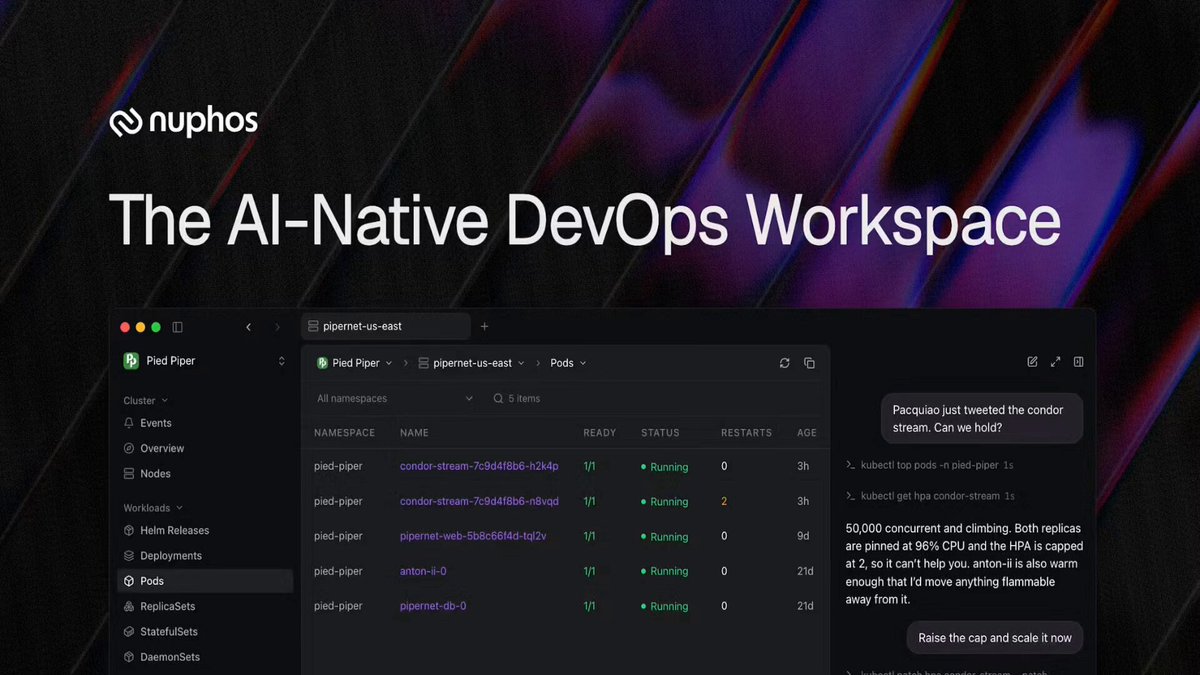
From that come the common scenarios of how different roles inside an engineering team work. The concept was defined as TAME, with 4 content pillars accordingly.
| Pillar | Launch role |
|---|---|
| T — Trust | Trust opens the category question. |
| A — Action | Action supplies the proof. |
| E — Experience | Experience removes the adoption objection. |
| M — Memory | Memory remains a later retention story until there is lived customer evidence. |
Nuphos allows a team to tame the infra, without giving up control.
2. Drafting Demand Generation Briefs
The launch was rather intense, but to keep the Asset > Distribution > Messaging loop closed and self-improving, I tracked and picked the high-engagement post ideas, then converted them into long-form blogs.
We all know demand generation is a huge part of a B2B marketer's job, and we always struggled to find the right "signal" to convert. I think the best way to do the so-called signal sourcing is to conduct content experiments via different channels. From what I saw during the launch of Nuphos, a LinkedIn post is a strong signal of buyer intent. Several posts following the 4 pillars did stand out to senior decision makers.
Later the post was converted into the blog post “OOMKilled tells you what happened, not why” and it received several full-scroll reads during the launch week.

Also, launching long-form content on Hacker News did generate a decent amount of traffic. Apparently there's a group of people using an agent or an RSS service to run a newsletter based on the forum, and it brought in stable and qualified views.
3. Producing Media Assets
I briefed, drafted, drew and edited my own product videos for the launch.
I've never handcrafted nor built animation in my life, not even imagining myself producing one; but here I am, sitting at my desk hopping between Codex and Claude Code and delivered them. Actually, I even built up my own production pipeline after finalising my first one.
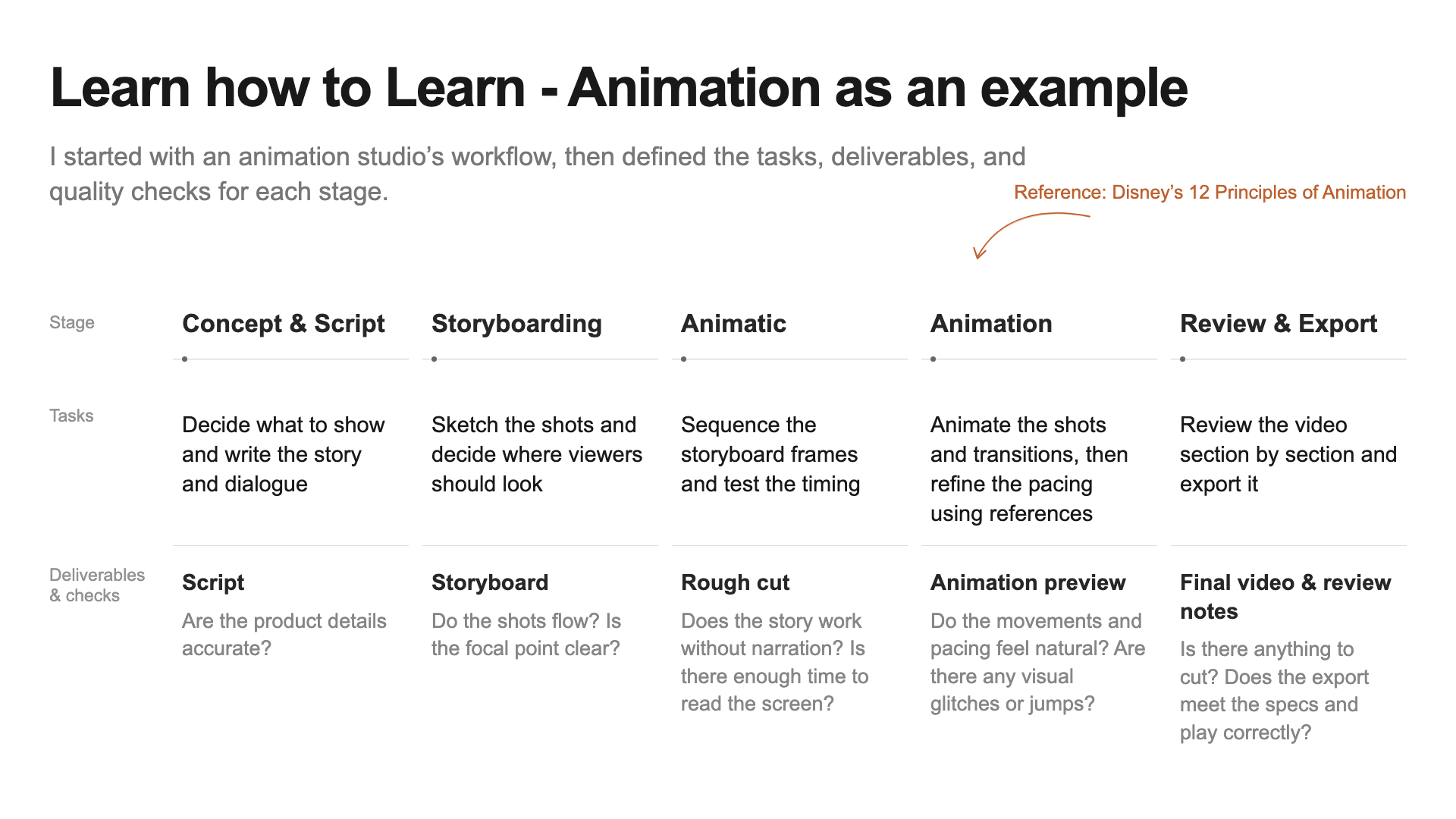
The best way to kick off an unknown aspect is to mimic the expert. I searched for 5 media and animation studio workflows and defined it step by step with clear deliverables. I wasn't even aware that there was a complete guide and well-wrapped skills like the motion-design-skill by LottieFiles out there. Throughout the process, I was pretty much handling the HTML and trying to materialise my ideas into prompts. The final result was actually quite fine.
Result
- Launch post on X reached about 2.3M public views in the first week.
- Product Hunt landed on #3 of the day.
Learning
Honestly, the launch itself was successful, but from a GTM perspective it quite fails, as the traffic generated from the campaign wasn't as qualified as we expected. Even though X was a great hit, the nature of the channel is low-quality traffic with doubtful conversion. Partnering with the agency mostly brings the possibility of figure inflation.
You have to go to where your audience gathers information, and deeply penetrate through the source.
This is what our advisor noted before our launch, unfortunately the result itself somehow proved that we delivered a successful campaign yet with low business value.
Another learning was that Product Hunt these days is quite different from the time when Zeabur was first launched. There's a full business behind the launches now, with "experts" tracking voting trends intensely and driving an additional source to push the result. I do think the intent of hunting good products on the platform had been commercialised, and thus altered.
Reflection
If I'd been asked to optimise or even redo the campaign, the main thing I would change would be the choice of channel. I would definitely ditch the social posting and influencer campaign on X and focus on Product Hunt and LinkedIn, along with newsletter sponsors. After viewing the quantitative traffic sources and from speaking with audiences, one thing I realised is that buying signals, or let's say high conversion intent for dev tools, generally come in when the channel and the content itself are educational and well curated.
Take PostHog for example. I've browsed through the open handbook and their YouTube channel. You can tell that with tools that require understanding and time to process, long-form content is a much better fit for potential clients.
Well, lead nurturing is the term for that, and it wasn't a brand-new concept but an ancient one in the B2B field. Before a massive launch and making noise, I'd test out several lead-nurturing sources and see which turns out to be the best fit for the brand.
With marketing, especially when it comes to channel choices, every brand has its own unique mix.