Supporting Young Adult Family Caregivers in Full-Time Education for a Resilient Healthcare System
— Edward Albert
Context
Persona
Young adult caregiver & full-time law student. Cares for her chronically ill mother.
“People accusing me of using caring as an excuse for not showing up so many times.”
Research
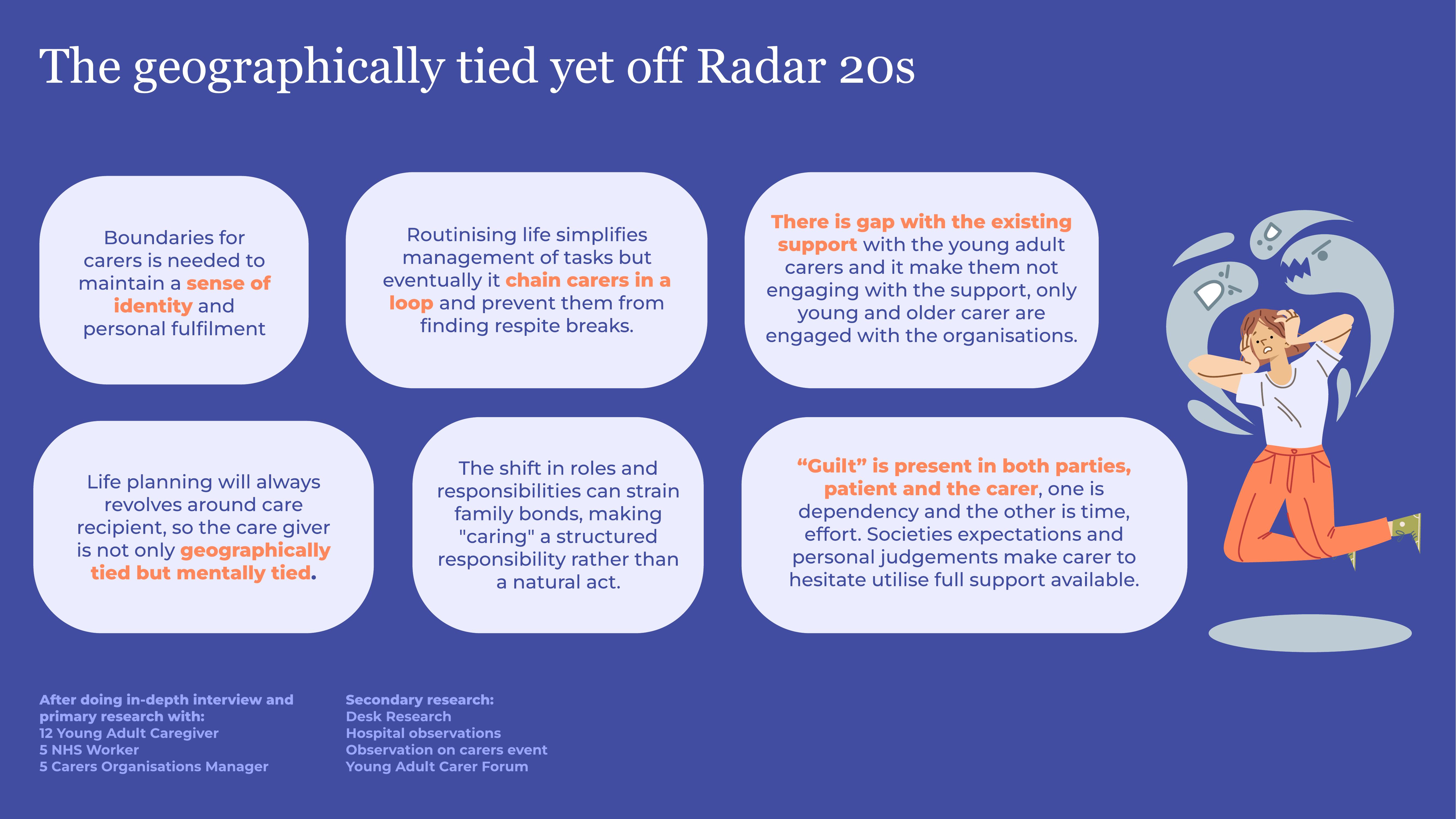
Caring responsibilities are unseen by institutions and peers, leading to isolation.
Torn between being a student and being a caregiver, struggling with dual identity.
Tied to a specific location near their care recipient, limiting social and academic life.
Fall through the cracks between NHS, social care, and education support systems.
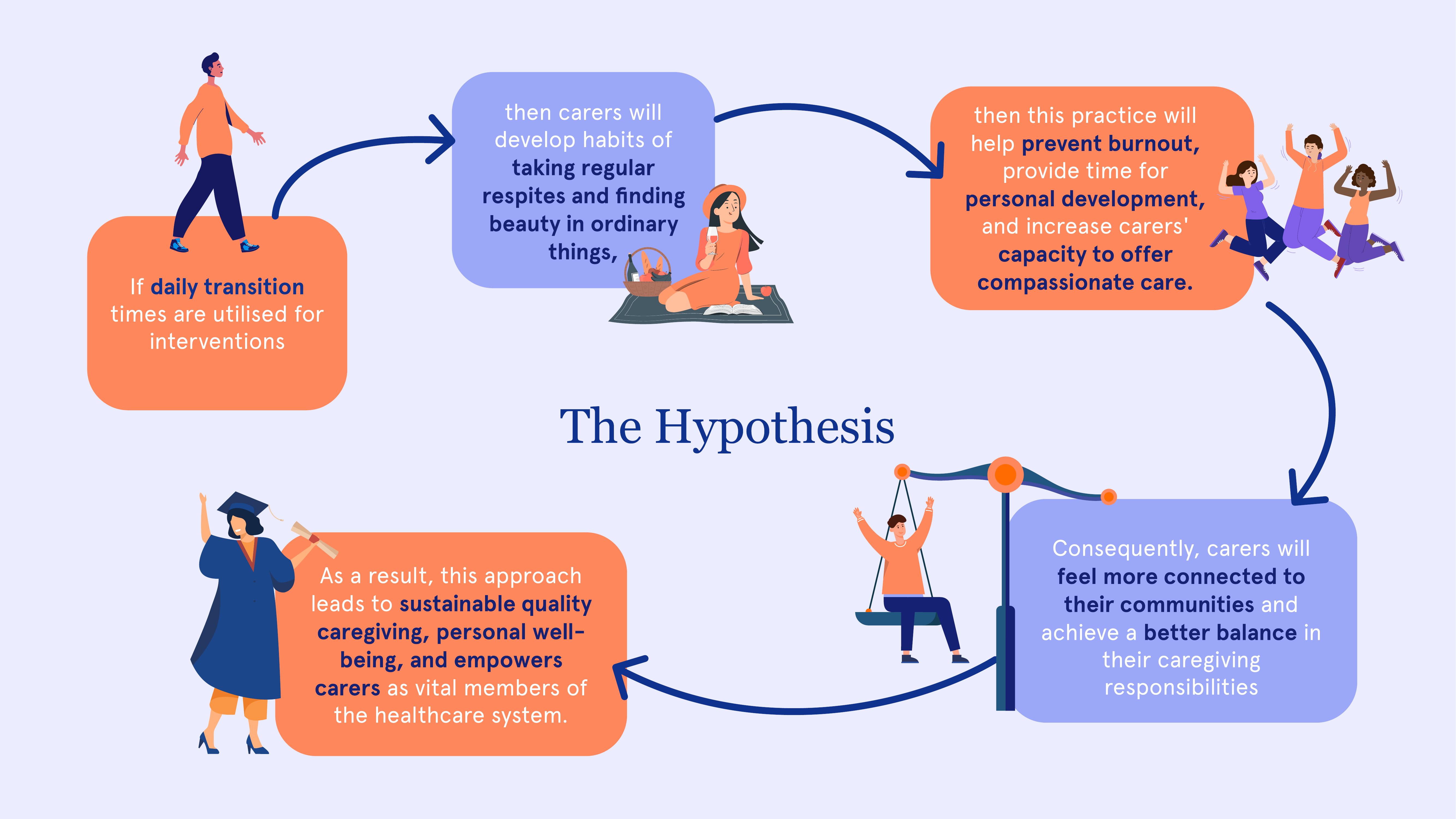
Constant worry and guilt about care quality while managing personal development.
Desire for peer connection but lack of spaces and time to find fellow carers.
Reframing
AS-IS
HOW WE WANT
Ideation
07
The Service
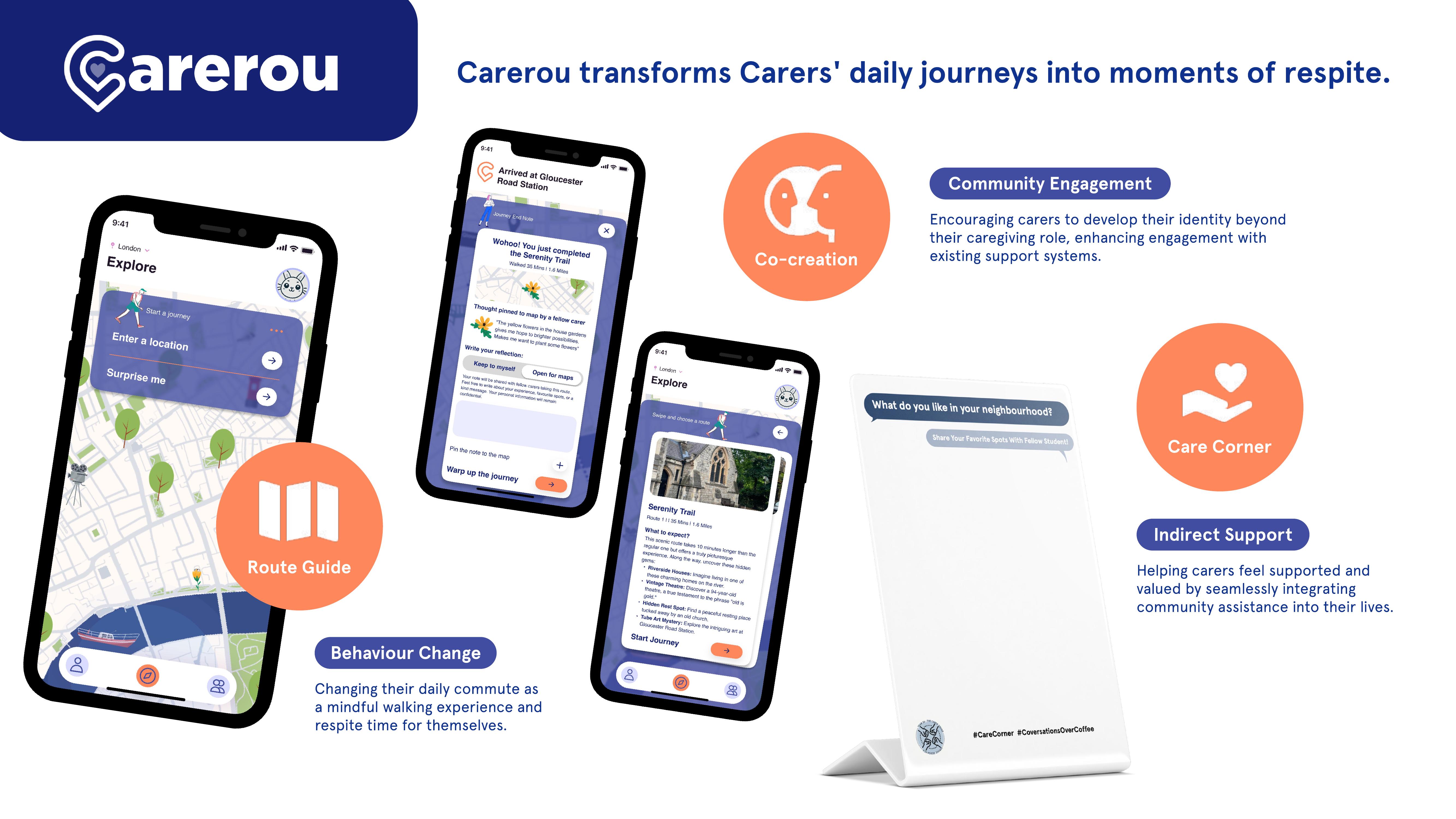
Behaviour Change
Participatory Design
Indirect Support
Engagement
Validation
10
11
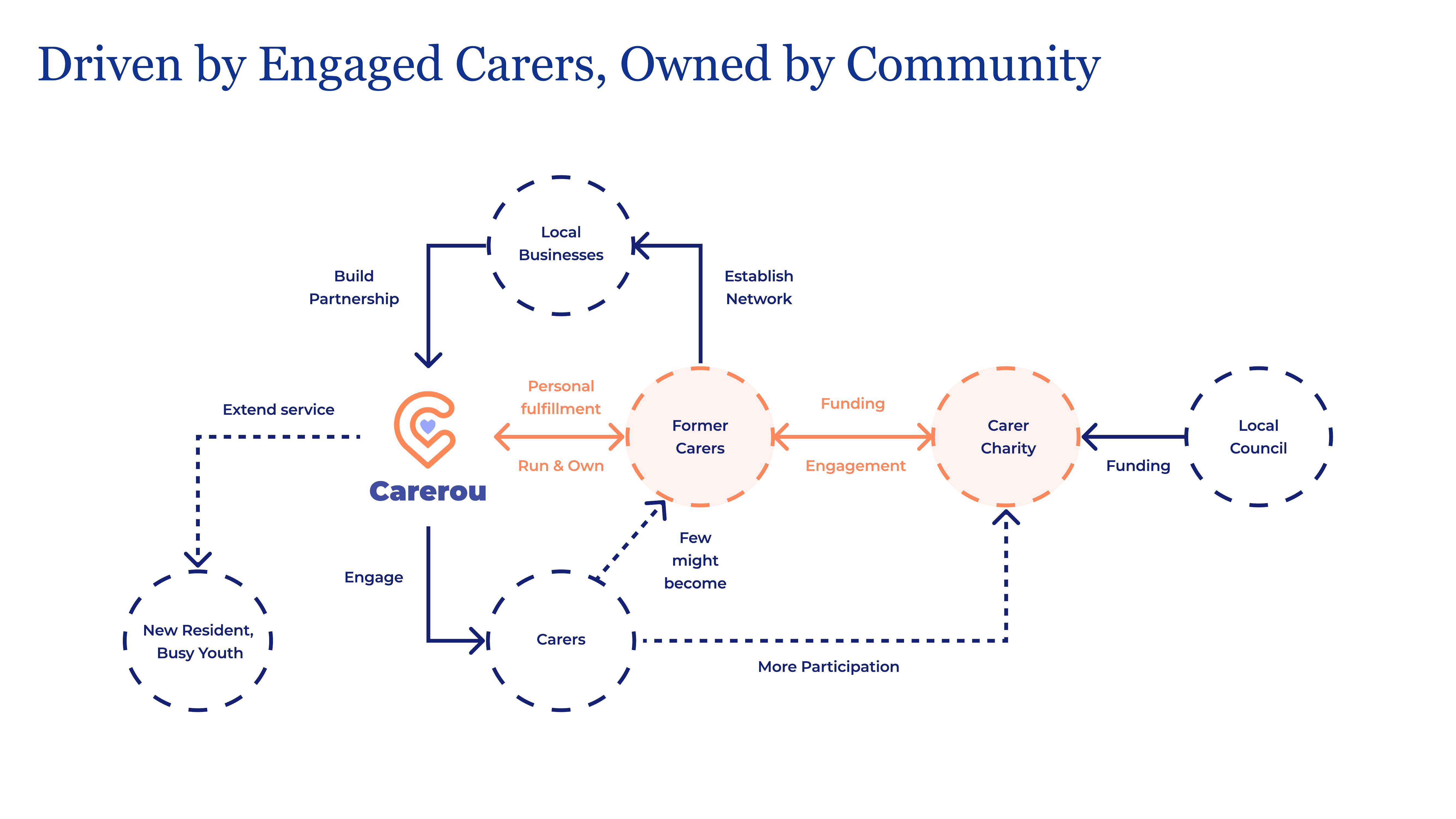
Sustainability
12
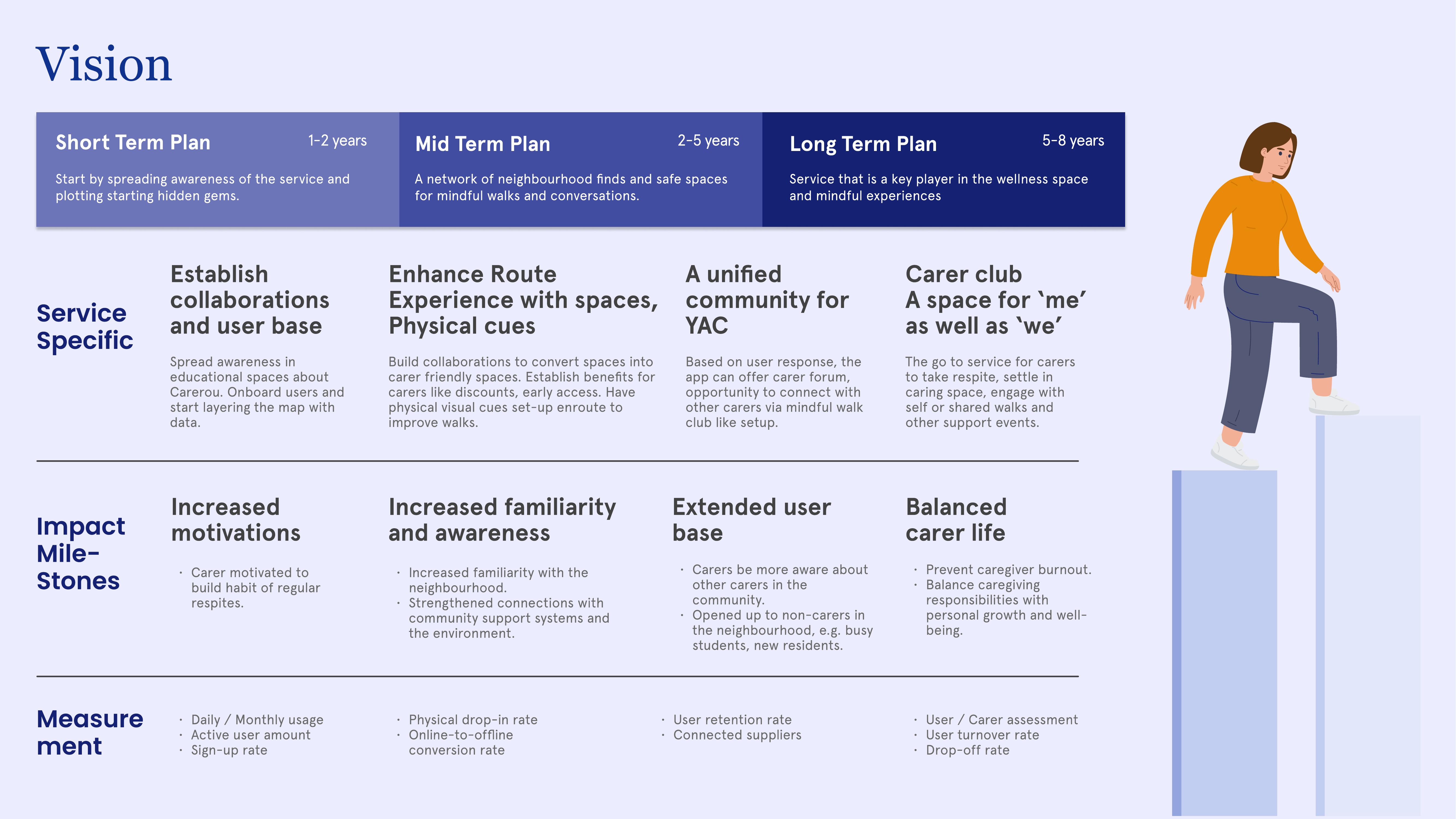
Vision
| Short Term (1-2 yrs) | Mid Term (2-5 yrs) | Long Term (5-8 yrs) | |
|---|---|---|---|
| Service Specific | Pilot Mindful Routes & Care Corners in 2 boroughs. Build carer community through co-creation workshops. | Expand to 10+ boroughs. Integrate with local council & NHS referral pathways. Launch digital companion app. | National rollout. Embed in healthcare system as standard carer support. Self-sustaining community model. |
| Impact Milestones | 50+ carers engaged. Partnerships with 3 local businesses & 2 carer charities. | 500+ carers supported. Recognised by NHS as complementary service. Policy input. | 5,000+ carers in network. Measurable reduction in carer burnout. Influence carer legislation. |
| Measurement | Wellbeing surveys, route usage, workshop attendance, qualitative interviews. | Longitudinal wellbeing data, retention rates, referral volume, carer satisfaction. | System-level health outcomes, NEET reduction, economic impact analysis. |
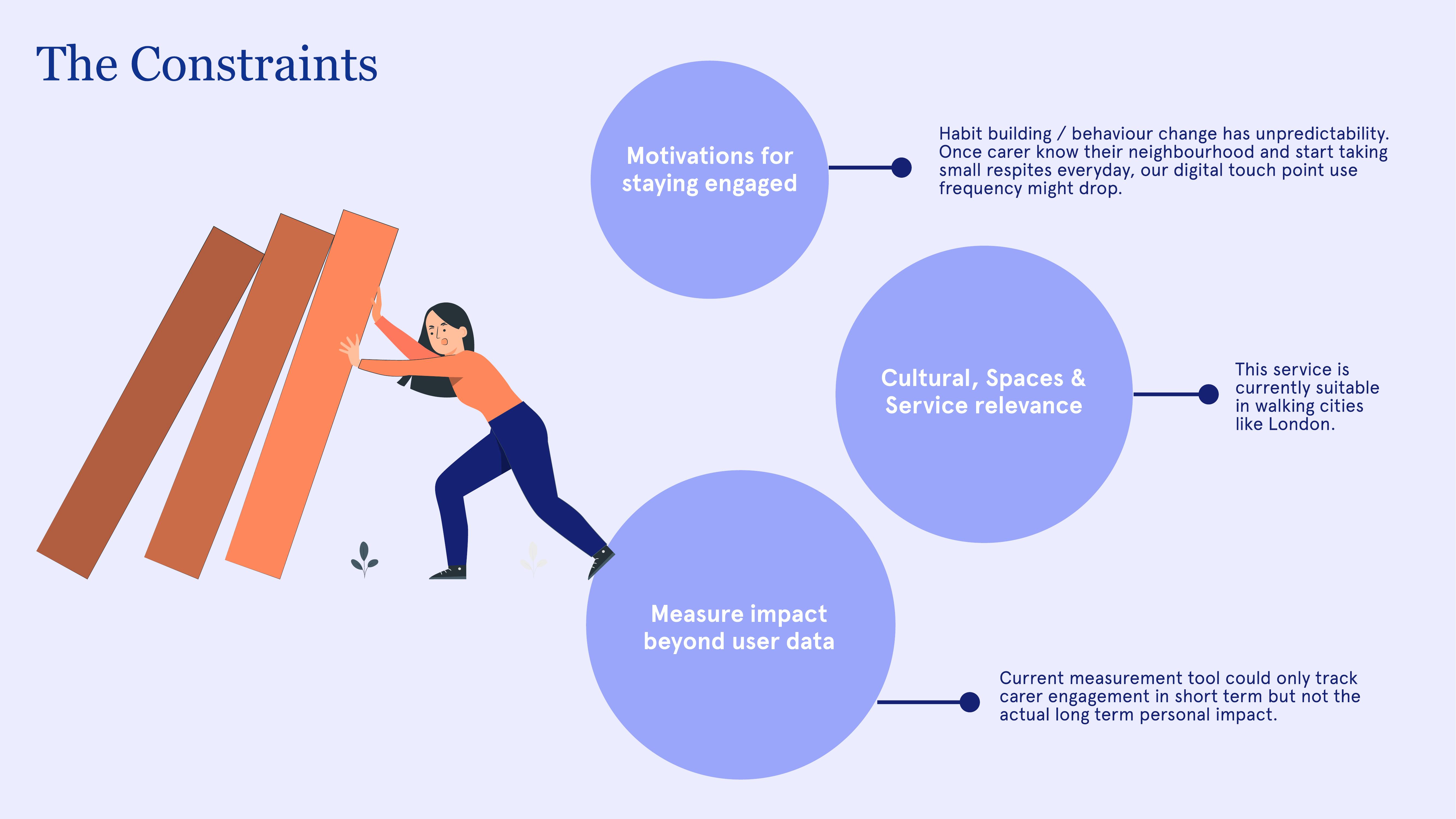
Constraints
14
Impact
16
Reflections
How much should we intervene in carers' lives? Respecting autonomy while offering meaningful support requires careful calibration of service touchpoints.
Beyond the obvious stakeholders, informal networks, cultural norms, and policy gaps shape the caring experience in ways that are easy to overlook.
As designers, we brought assumptions about what carers need. Constant reflection and participatory methods helped us stay grounded in lived experience.
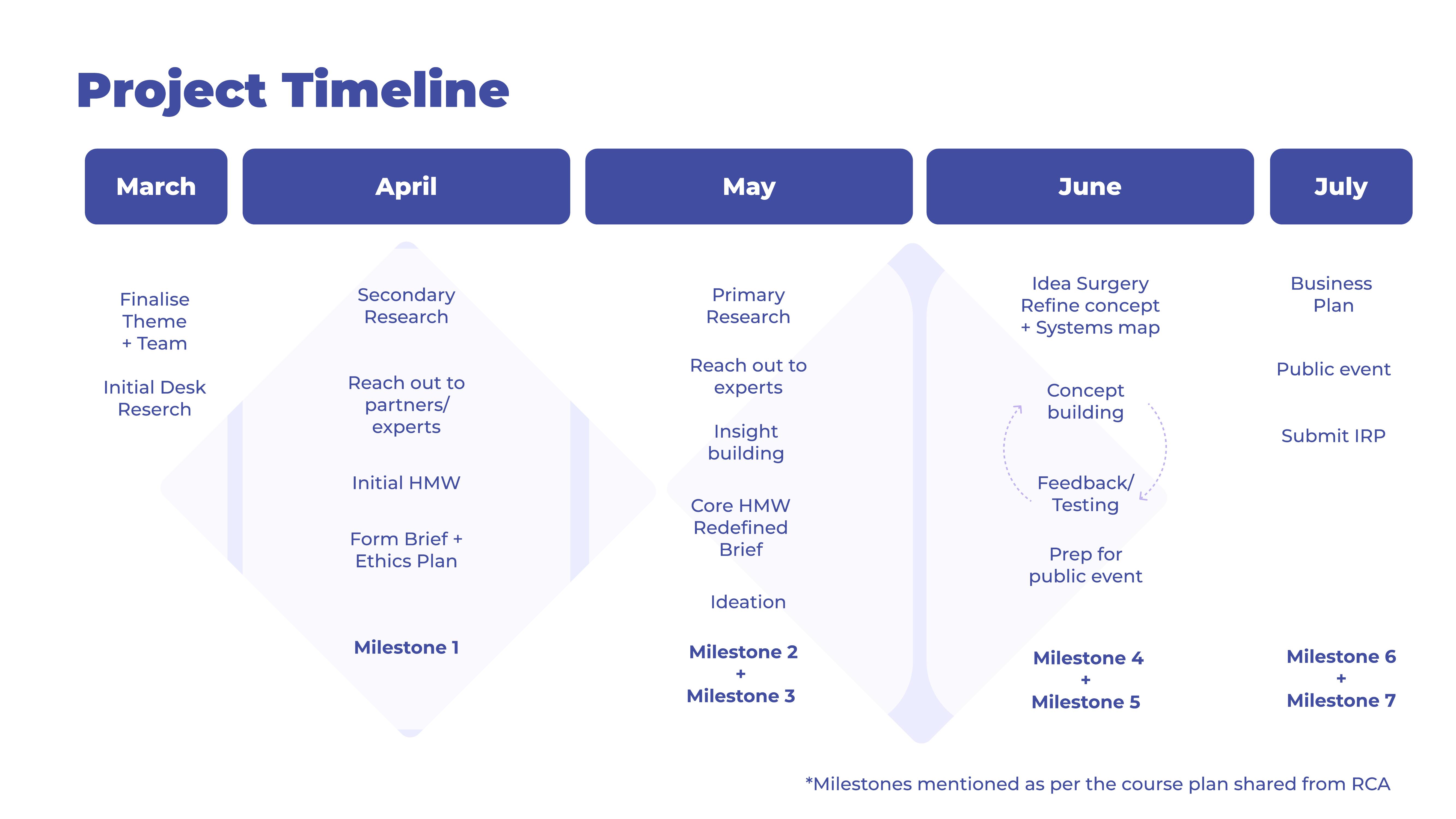
Process
References
19
Dewi · Ling · Trisha
Carerou — RCA MA Service Design 23/24
20